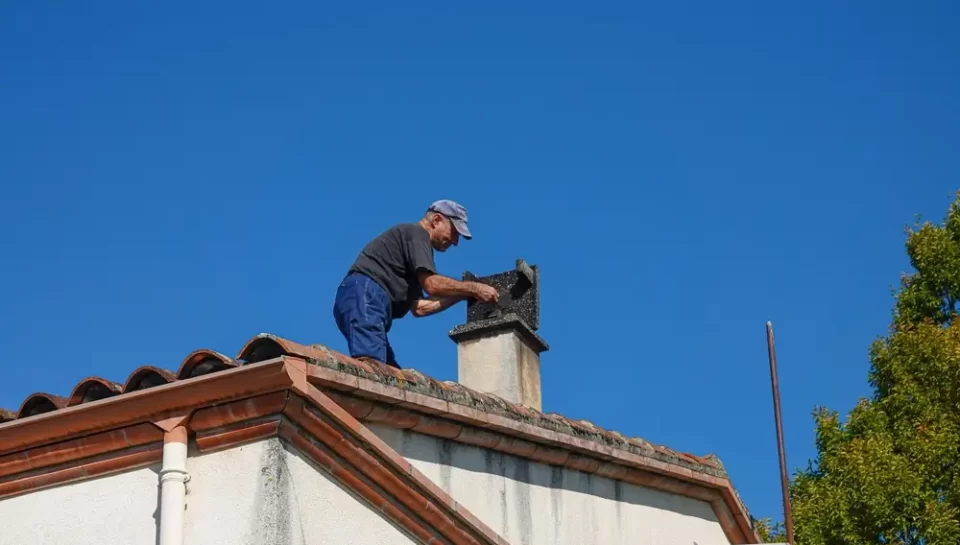
A fireplace is supposed to feel cozy, not risky. Chimneys can collect soot, creosote, animal nests, and moisture. These problems can cause chimney fires and carbon monoxide issues. If ignored, they can lead to costly repairs.
This guide explains how $1 works. It covers what inspectors look for during a $1. It also tells you when you may need a $1. You will learn what affects $1. Finally, it shows you how to choose a $1 that protects your home.
Why Chimney Inspections and Cleaning Matter?
Chimneys experience heat, smoke, weather, and building movement. Over time, that can create hazards you can’t see from the living room.
Common reasons homeowners schedule $1:
- Creosote buildup (a leading cause of chimney fires)
- Blockages (nests, debris, fallen tiles, or collapsed liners)
- Cracked flue tiles or damaged liners (revealed during $1)
- Loose or failing masonry and mortar
- Water intrusion from flashing or a damaged crown
- Damaged caps and screens (found during $1)
A good $1 is both preventive and diagnostic: it removes buildup and also checks whether the system is safe to use.
Also Read: Top Things to Know Before Your Next Chimney Inspection
Types of Chimney Inspections (Level 1 vs Level 2 vs Level 3)
When people search $1, they’re usually trying to understand why one inspection is more involved than another. In the USA, people often discuss inspections in “levels.” Here’s a practical breakdown.
| Inspection Type | What It Typically Includes | When It’s Commonly Recommended |
|---|---|---|
| $1 | Visual check of readily accessible areas: firebox, damper, visible flue, accessible exterior | Routine annual check when no changes were made, and no problems are suspected |
| $1 | Everything in Level 1 plus a deeper review of accessible attic/crawl spaces and concealed areas; often includes $1 (video scanning) | After a chimney fire, after buying a home, after earthquakes/storms, after changing appliances or liners, or when damage is suspected |
| Level 3 inspection | Invasive inspection (opening walls or parts of the chimney structure) to reach hidden areas | When a serious hazard is suspected and a Level 1 or 2 can’t confirm safety |
If you’re changing from wood-burning to gas, installing a new insert, or you’ve had a leak or smoke-drafting issue, a $1 is often the safest choice.
What Happens During a Fireplace Chimney Inspection?
A thorough $1 usually covers the whole system—not just the flue.
Key areas inspectors check
- $1: cracks, missing refractory panels, warping
- $1: creosote levels, cracks, liner gaps (core of $1)
- $1: signs of back drafting or negative pressure
- $1: loose bricks, spalling, leaning, mortar loss
- $1: crown, flashing, cap, screen (part of $1)
- $1: whether combustibles are too close to hot surfaces
Tools that may be used
- Bright lights and mirrors
- Moisture meters
- $1 (especially for Level 2)
A proper inspection should end with clear findings: what’s safe, what needs cleaning, what needs repair, and what should be monitored.
Chimney Cleaning: What Gets Removed (and Why)
Chimney cleaning focuses on removing deposits that restrict airflow or increase fire risk.
Common buildup removed
- $1: loose black residue from regular burning
- $1: sticky, tar-like deposits that can ignite
- Debris and blockages: nesting material, leaves, broken tiles
How often should you clean?
There isn’t one rule for every home, but many homeowners schedule cleaning based on:
- How often the fireplace is used
- The type of fuel (wood quality matters)
- Whether smoke backs up or odors appear
If you use your fireplace regularly, an annual $1 is an everyday routine.
Also Read: Commercial Property Inspection Checklist – Complete Guide
How to Inspect a Chimney Yourself (Safe Homeowner Checks)
People often search for $1 because they want a quick DIY check. You can do a basic safety look—but it doesn’t replace a professional inspection.
Simple checks you can do.
- Look for $1 on brick (efflorescence), which can suggest moisture issues
- Check for missing mortar, spalling bricks, or leaning sections
- Shine a flashlight up the flue (from the firebox) and look for heavy buildup or blockages
- Watch for smoke spillage into the room or strong smoky odors
- Listen for animals (especially in spring)
What you should not do
- Don’t climb onto the roof without proper safety equipment
- Don’t try to scrape deep creosote deposits yourself
- Don’t use the fireplace if you suspect a blockage or a damaged liner
If your DIY check raises concerns, schedule $1 for a complete assessment.
Chimney Inspection Cost: What Affects the Price?
Searches like $1 or $1 are common because pricing varies widely across the USA. Instead of focusing on a single number, focus on what drives the cost.
| Cost Factor | Why It Changes the Total |
| Inspection level | A $1 is typically higher than Level 1 because it’s more detailed and may include camera scanning. |
| Accessibility | Steep roofs, tall chimneys, or limited access increase labor and safety requirements |
| Cleaning included or separate | A combined $1 can differ from inspection-only pricing |
| Chimney type | Masonry vs prefabricated systems can require different approaches |
| Condition and history | Evidence of a past chimney fire, water damage, or major repairs can require extra evaluation. |
| Region | Pricing varies by local labor markets (e.g., searches like $1 reflect local demand) |
Cost expectations (relative, not one-size-fits-all)
- Level 1 is usually the most affordable.
- Level 2 is more involved and often costs more, especially with camera work.
- Repairs, if needed, are separate from inspection and cleaning.
If you’re comparing quotes from $1, confirm what they include (inspection level, camera scan, and written report).
Also Read: How Preventive Maintenance Inspections Save Your Money?
Common Chimney Problems Found During Inspections
| Symptom You Notice | What It Might Mean? | Why It Matters? |
| Smoke smell when not in use | Creosote odor, moisture issues, poor draft | Can signal buildup or airflow problems |
| Smoke spills into the room | Blockage, negative pressure, and draft issues | Safety concern: stop use until checked |
| Pieces of tile or debris in the firebox | Flue liner deterioration | Can lead to heat transfer hazards |
| Water stains on the walls near the fireplace | Flashing/crown leaks | Moisture accelerates deterioration |
| Rusted damper/firebox components | Chronic moisture | Suggests top-of-chimney water entry |
These are precisely the issues a strong $1 should identify early.
FAQs
1. How much does it cost to inspect a chimney?
The $1 cost depends on the inspection level, access difficulty, and whether camera scanning is included. A basic Level 1 inspection is usually the lowest-cost option because it focuses on readily accessible areas. A $1 service is more detailed. It often includes video scanning and checks of other accessible spaces. Because of this, it usually costs more. When you compare quotes, ask what level of service they offer. Also, check if a written report is included. Two quotes may look alike but can cover very different work.
2. What is a Level 2 chimney inspection, and when do I need one?
A Level 2 inspection goes beyond a routine visual check. It is often suggested to check your chimney after a fire. You should also check it after buying a home. Severe weather or structural changes can also require a check. Additionally, if you change appliances, like adding an insert or switching fuel type, you should inspect them. It may include $1 to look for hidden cracks, liner gaps, or damage that you can’t confirm with a basic visual inspection. If your chimney has changed a lot or you think there is a safety issue, Level 2 is usually the best choice.
3. Is chimney cleaning the same as a chimney inspection?
Not exactly. Cleaning removes soot and creosote (and sometimes debris), while an inspection evaluates safety and condition. Many homeowners pay a small fee for a technician to clean the flue. The technician also checks if the liner and parts are in good condition. A clean chimney is safer. However, cleaning does not ensure there are no cracks, gaps, or moisture damage. These issues are found during an inspection.
4. How do I know if my chimney needs cleaning right now?
Common signs include stronger-than-usual smoke odor, reduced draft, smoke spilling into the room, visible black buildup inside the firebox or flue, or hearing animals in the chimney. If you’re unsure, it’s safer to schedule a $1 rather than keep using the fireplace. Creosote can build up quickly, often faster than homeowners think. This depends on the quality of the wood and how it is burned. Blockages can also happen suddenly because of nesting.
5. What should I look for when choosing a chimney inspection company?
Start with whether they offer $1 and whether they clearly explain the inspection level they’re performing. Ask if they provide a written report with photos. Also, ask if they charge $1 for Level 2 inspections. Find out how they deal with safety concerns if they discover a hazard. Also, confirm whether cleaning is included or priced separately. A good provider will be transparent about scope and will prioritize safety over quick “patch” advice.
Conclusion
A good $1 cleaning routine helps stop chimney fires. It also improves draft performance. Plus, it catches moisture or liner damage before it gets costly. Whether you need a simple $1 routine or a more detailed one, the goal is the same. You want to make sure the system is safe and working as it should.
For an unbiased look at your home’s condition and safety risks, $1 can help. It can document what you find and suggest next steps for repairs or expert help if needed.
.
Google Map Link: https://maps.app.goo.gl/SxBMeJXdTfiZHj8r5
Instagram Link: https://www.instagram.com/keypropertyinspectiongroup/
Facebook Link: https://www.facebook.com/pg/Keypropertyinspectiongroup/
LinkedIn Link: https://www.linkedin.com/company/key-property-inspection-group/
Twitter Link: https://twitter.com/inspection_key