If your home has Masonite siding, you’ve probably asked some version of the same question homeowners across the USA ask: how long does Masonite siding last—and how do I know if mine is still in good shape? The honest answer is: Masonite (also called hardboard/Masonite siding) can last for decades in the right conditions, but it can also fail early if moisture gets into the board edges, joints, or behind the siding.
This guide explains what Masonite siding is made of, how to identify warning signs, what shortens its lifespan, and when repair, painting, covering, or complete Masonite siding replacement is the smartest next step.
What Is Masonite Siding?
What is Masonite siding? It’s a type of exterior cladding made from compressed wood fibers and resins, formed into lap boards or panels. You’ll see it described as:
- Hardboard Masonite siding
- Masonite board siding
- Siding hardboard Masonite
- Masonite siding panels
- Masonite lap siding (often 8-inch or 12-inch exposures)
It became popular because it offered a clean look (including smooth Masonite siding) at a lower cost than solid wood.
Also Read: Masonite Siding Explained: What It Is and How to Spot It?
So… How Long Does Masonite Siding Last?
The lifespan depends far more on moisture control and maintenance than on the siding’s appearance.
A practical way to think about it:
- Shorter lifespan when water hits the bottom edges repeatedly, gutters overflow, or paint/caulk maintenance is neglected.
- Longer lifespan when the siding stays dry, clearances are correct, and paint and caulk are maintained.
Instead of a single “magic number,” use the condition-based checklist below to estimate remaining life.
Factors That Determine Masonite Siding Lifespan
1) Moisture exposure (the #1 factor)
Hardboard absorbs water more easily through cut edges, seams, and damaged paint. Once moisture gets in, boards can swell, soften, and deteriorate.
High-risk moisture sources include:
- Sprinklers hitting walls
- Roof runoff dumping near the siding
- Poor kick-out flashing at roof-to-wall intersections
- Clogged gutters and downspouts
- Ground contact or snow piled against the siding
2) Clearance from grade and hard surfaces
Masonite needs clearance above soil and often above concrete patios/walkways. When the bottom course sits too low, it stays wet longer.
3) Paint and caulk maintenance
- Painting Masonite siding isn’t just cosmetic—paint acts as a protective barrier.
- Caulk also matters, but over-caulking or sealing areas that should drain can trap moisture.
4) Installation details
Even high-quality paint can’t overcome poor details:
- Missing or incorrect flashing
- Improper joint spacing
- Fasteners that break the surface and allow water entry
- No drainage plane behind siding
Signs Your Masonite Siding Is Near the End of Its Life
Homeowners often notice these Masonite siding problems first:
- Swollen bottom edges (puffy, wavy, or “mushroomed” look)
- Soft, spongy sections that dent with pressure
- Flaking paint that returns quickly after repainting
- Crumbling corners at joints
- Mold/mildew recurring in the same areas
- Bubbling behind paint near seams
If these issues are localized, Masonite siding repair may be enough. If they’re widespread across multiple sides of the home, it may be time to replace Masonite siding.
Masonite Siding Issues by Location (What Fails First)
| Home Area | Why It Fails | What to Look For |
|---|---|---|
| Bottom courses | Splashback, soil moisture, snow | Swelling, soft edges, peeling paint |
| Under windows | Failed caulk/drip edges | Rot at corners, stains below sills |
| Roof-to-wall intersections | Missing kick-out flashing | Localized rot near the step flashing |
| Behind bushes | Poor drying and trapped moisture | Mold, paint failure, soft boards |
| Near sprinklers | Constant wetting | Surface erosion, swelling |
This helps you inspect the “usual suspects” before you assume the whole house needs replacement.
Repair vs Replacement: What Makes the Most Sense?
Use this practical decision table before planning to replace Masonite siding.
| Condition | Best Path | Why |
| Small holes, minor cracks | Patch + prime + paint | Local fixes can last if moisture is controlled |
| Swelling is limited to a few boards | Replace damaged boards | Targeted board replacement is often cost-effective |
| Widespread softness or rot | Full replacement | Repairs won’t hold if the substrate is failing |
| Repeated paint failure | Investigate moisture + repair | Paint won’t last over wet/soft boards |
| Underlying sheathing damage | Replace + fix water entry | Structural issues must be corrected |
If you’re repeatedly searching for and repairing Masonite siding and the same areas fail every year, it’s usually a moisture-detail problem, not just “old siding.”
Can You Paint Masonite Siding to Extend Its Life?
Yes—if the boards are still solid.
Can you paint Masonite siding?
Absolutely. A sound paint system can help extend life by sealing the surface.
Best practices (homeowner-friendly)
- Repair soft spots first (don’t paint over failing board).
- Prime exposed fibers and repaired areas.
- Use high-quality exterior paint designed for your climate.
- Maintain caulking on Masonite siding at joints and penetrations, but keep drainage pathways open.
How often should you paint Masonite siding?
It varies by sun exposure and weather. Instead of tracking years, track condition:
- Inspect annually
- Recoat when you see chalking, peeling, or failing caulk—not after damage starts
Can you pressure wash Masonite siding?
Many ask, can you pressure wash Masonite siding? High pressure can damage the surface and force water into seams. Gentle cleaning is safer.
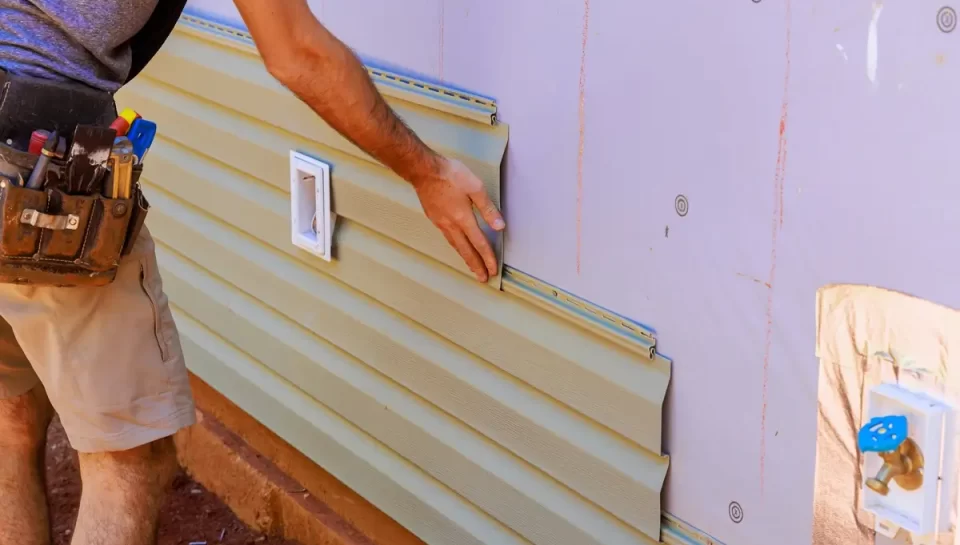
Can You Install Vinyl Siding Over Masonite?
Homeowners often ask can you install vinyl siding over Masonite siding, or can you put vinyl siding over Masonite.
Covering can work when:
- Masonite is still structurally stable (not soft/rotting).
- Moisture problems are fixed first.
- The new system is installed with proper flashing and drainage details.
Covering is not a solution if the walls are already wet or the boards are failing widely.
Is Masonite Siding Still Available (and Can You Match It)?
Questions like is Masonite siding still available, do they still make Masonite siding, or can you still buy Masonite siding come up often.
In many areas, matching older profiles exactly can be difficult. If you have an older style like 12-inch Masonite lap siding or a beaded pattern, you may need to:
- Replace an entire wall for a consistent look, or
- Switch to a compatible replacement profile.
This is why homeowners search for the best replacement for Masonite siding—because matching matters aesthetically.
Also Read: Metal Roof Leak Repair: How to Find and Seal the Leak?
Masonite Siding Replacement Cost: What Drives the Price?
Instead of a single number, focus on the factors that impact Masonite siding replacement cost and total project scope.
| Cost Driver | Why It Matters |
| House size & story height | More square footage and higher access increase labor costs |
| Extent of hidden damage | Rotten sheathing/framing adds time and materials |
| Removal vs cover-over | Full removal often costs more than covering |
| Replacement material choice | Different products have different material + labor costs |
| Trim and flashing updates | Proper moisture detailing is essential for longevity |
| Painting needs | Some replacements come prefinished; others need paint |
If you’re asking how much it costs to replace Masonite siding, the most significant variable is what you find behind the boards.
The Masonite Siding Lawsuit: Why People Mention It
Searches like Masonite siding lawsuit often appear when homeowners experience swelling and early failure. Regardless of history, your decision today should be based on current conditions and moisture risks. If boards are failing widely, replacement is usually the most reliable long-term fix.
FAQs
1. How long does Masonite siding last in real life?
Masonite siding can last for decades when it stays dry and is maintained with paint and proper caulking and flashing. The biggest reason it fails early is repeated water exposure—especially at bottom edges and around windows and roof-to-wall intersections. If you keep gutters working, control sprinklers, maintain paint, and ensure proper clearances, you can often extend the life significantly.
2. What are the earliest warning signs that Masonite siding is failing?
The earliest signs are usually swelling at the bottom edge, corners that look puffy or soft, and paint that peels repeatedly in the same areas. You may also notice crumbling near joints or a “spongy” feel when lightly pressed. These symptoms suggest moisture is getting into the board and that repairs should happen sooner rather than later.
3. Is it better to repair Masonite siding or replace it?
Repair makes sense when damage is localized—like a few boards that are swollen near a downspout or a small area of rot near a window. Replacement makes more sense when multiple elevations show soft boards, widespread swelling, or recurring failures even after repainting. The most innovative approach is to correct the moisture source first, then decide based on how much siding is still structurally sound.
4. Can painting Masonite siding extend its lifespan?
Yes, painting can extend lifespan if the boards are still firm and not rotting. Paint acts as a moisture barrier, but it only works when the surface is properly prepped and primed—especially at exposed fibers and repaired sections. Painting over wet or soft boards won’t last, and it can hide problems until they become more expensive.
5. Can I cover Masonite siding with vinyl instead of replacing it?
Sometimes. Installing vinyl over Masonite can be a practical option when the Masonite is stable and moisture issues are corrected. If the Masonite is already soft or failing across large areas, covering can trap problems and lead to worse damage behind the new siding. Proper flashing and drainage detailing are critical for any cover-over approach.
Conclusion
If you’ve been asking how long Masonite siding lasts, the best answer is condition-based: Masonite can perform well for a long time when it stays dry and is maintained, but it’s vulnerable to repeated moisture exposure and poor flashing/clearance details. Use the warning signs and decision tables in this guide to decide whether repairs, painting, covering, or complete replacement is the right move.
For an objective look at siding condition and moisture risk areas, Key Property Inspection Group can document what’s visible and help you prioritize next steps before minor issues become major repairs.
.
Google Map Link: https://maps.app.goo.gl/SxBMeJXdTfiZHj8r5
Instagram Link: https://www.instagram.com/keypropertyinspectiongroup/
Facebook Link: https://www.facebook.com/pg/Keypropertyinspectiongroup/
LinkedIn Link: https://www.linkedin.com/company/key-property-inspection-group/
Twitter Link: https://twitter.com/inspection_key