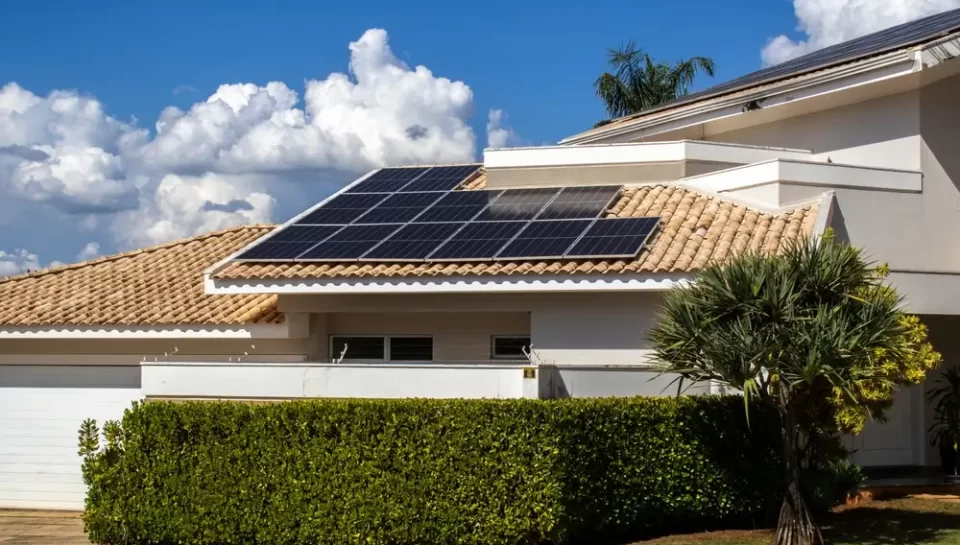
Thinking about solar usually starts with one simple question: how much solar power do you need for your home to actually make a difference on your electric bill (or keep the lights on during outages)? The answer isn’t one-size-fits-all. It depends on your monthly energy use, local sunlight, roof space, and whether you want full, partial, or backup power for emergencies.
This guide walks you through a practical way to estimate system size, choose batteries or a generator-style backup, and understand the real costs, without drowning you in math.
Step 1: Start With Your Home’s Energy Use
Before comparing solar power systems for homes, you need one number: your average monthly electricity usage in kilowatt-hours (kWh). You’ll find it on your utility bill.
Typical household ranges in the USA
- Small apartment or efficient home: ~400–700 kWh/month
- Average single-family home: ~700–1,200 kWh/month
- Larger homes with higher HVAC use: 1,200–2,000+ kWh/month
If you want solar power for home planning that’s accurate, use a full 12 months of bills (because summer air conditioning and winter heating can swing usage a lot).
Also Read: How to Install a Solar Panel at Home?
Step 2: Decide Your Goal (Offset vs Backup vs Off-Grid)
Not every homeowner wants the same thing from home solar panels.
Common goals
- Bill reduction (partial offset)
- Near-zero electric bill (full offset)
- Backup power during outages (hybrid)
- Off-grid solar power systems for homes (no utility connection)
Your goal changes everything, from the size of the solar power system for your home to whether you need solar power batteries.
Step 3: Estimate How Much Solar Power You Need (Simple Formula)
Here’s the easiest way to estimate system size.
Basic sizing method
Take your average daily usage:
- Monthly kWh ÷ 30 ≈ Daily kWh
Divide by your “peak sun hours” (varies by location):
- Daily kWh ÷ Peak sun hours ≈ Needed solar kW (before losses)
Add a buffer for system losses (inverter, temperature, shading):
- Multiply by ~1.15 to 1.25
Example
If your home uses 900 kWh/month:
- 900 ÷ 30 = 30 kWh/day
- If you get ~5 peak sun hours: 30 ÷ 5 = 6 kW
- Add losses: 6 × 1.2 = ~7.2 kW system
That’s a practical way to answer “how much solar power do I need for my home” without a complex calculator.
Peak Sun Hours: Why Location Matters
Peak sun hours aren’t the same in every state. A solar power calculator for a home estimate will vary because the Southwest gets more consistent sun than the Pacific Northwest.
| Sunlight Level (General) | Peak Sun Hours (Typical) | What It Means |
|---|---|---|
| High-sun areas | ~5–7 | A smaller system can produce more energy |
| Moderate-sun areas | ~4–5 | Mid-sized systems are common |
| Lower-sun areas | ~3–4 | You may need more panels for the same output |
Shading from trees, roof angle, and roof direction can also reduce production, which is why installers apply a performance buffer.
Panel Count: Turning kW Into “How Many Panels?”
Once you have an estimated system size (kW), you can estimate how many solar panels you may need for a home.
Quick panel math
- Many modern residential panels are roughly 350W–450W each.
- A 7.2 kW system is 7,200W.
- 7,200 ÷ 400W ≈ 18 panels
So your solar power setup for home might be around 16–24 panels for an average household, depending on usage and sunlight.
Inverters: The “Brain” of a Solar Power System
A solar power inverter for the home converts DC power from solar panels into AC power for your home.
Common inverter setups:
- String inverter (one central unit)
- Microinverters (one per panel)
- Hybrid inverter (supports battery storage)
If you’re considering solar power backup systems for homes, a hybrid inverter is often part of the conversation because it’s designed to integrate with home solar power batteries.
Do You Need Batteries? (And How Much?)
Batteries don’t always help you offset more energy; they help you use solar when the sun isn’t shining and provide backup power during outages.
When batteries make sense
- Your area has frequent outages
- You want a backup power supply for home essentials
- Your utility rates are higher at night (time-of-use plans)
- You’re aiming for solar power for an off-grid home use
Battery sizing (simple approach)
Start by listing what you want to run during an outage:
- Refrigerator
- Lights and outlets
- Internet/router
- Some HVAC (often limited)
- Medical devices (if applicable)
Then estimate how many hours of backup you want. A solar power battery bank for the home can be sized for essentials rather than the whole home.
| Backup Goal | Battery Approach | Typical Use Case |
| Essentials only | Smaller battery bank | Keep critical loads running overnight |
| Whole-home backup | Larger battery bank | Runs most circuits for longer outages |
| Off-grid | Largest storage + generator support | No grid connection; needs redundancy |
Many homeowners looking for the best battery for home solar power choose a battery that covers essentials first, then expand later.
Solar Generators and Power Stations: What Are They Good For?
A solar power generator for the home usually refers to a portable power station paired with portable panels. These are different from a full rooftop solar system.
Good for
- Emergency backup for small loads
- Apartment and renter-friendly power
- Camping, RV, and small device charging
- Solar home generators for power outages (limited loads)
Not ideal for
- Running central air conditioning long-term
- Powering an entire house for days
If you need serious backup, a fixed solar power system kit for the home with batteries is more reliable than a portable solar power generator.
Solar Power Kits: DIY vs Installed Systems
You’ll see searches for solar power kits for homes, DIY solar power kits, and complete solar power kits for homes. Kits can work for small off-grid projects, sheds, cabins, or tiny homes, but whole-home systems need careful design.
| Option | Best For | Watch-Outs |
| DIY solar power for home (small) | Sheds, RVs, small loads | Permitting, wiring safety, and limited capacity |
| Installed residential system | Most grid-tied homes | Higher upfront cost, but optimized design |
| Off-grid solar | Remote homes | Needs larger batteries + backup plan |
A safe rule: DIY is great for smaller, simple use cases. Full-home systems usually require professional electrical work.
Solar Power for Home Cost: What Impacts the Price?
The cost of solar power for homes depends on system size, equipment choices, and where you live.
Key cost drivers:
- System size (kW)
- Roof complexity (height, material, layout)
- Inverter type
- Battery storage (big driver)
- Electrical panel upgrades
- Permits and utility interconnection
Cost comparison (relative)
| System Type | Upfront Cost Level | What You Get |
| Grid-tied (no battery) | Lowest | Bill reduction, no backup during outages |
| Hybrid (battery for essentials) | Medium | Some backup + bill benefits |
| Whole-home battery backup | Higher | Strong outage protection |
| Off-grid solar power system for the home | Highest | Independence, but needs careful design |
Many homeowners offset the upfront cost with solar power loans or local incentives. Some areas also offer grants for solar power panels for homes, though availability depends on state and program rules.
Special Situations: Mobile Homes and Tiny Homes
Solar power for mobile homes and tiny home setups can work well because energy loads are lower. Still, roof space and wiring may limit options. A portable solar power setup for the home (portable panels + power station) can also be a practical starting point for renters or smaller living spaces.
FAQs
1. How much solar power do I need for my home in kW?
Start with your monthly kWh usage from your utility bill. Divide by 30 to estimate daily kWh, then divide by your local peak sun hours (often 3–7 depending on location). After that, add a buffer for system losses (about 15–25%). For example, 900 kWh/month in a 5-sun-hour area often points to a system around 7 kW. This gives a realistic starting estimate before you get a full design.
2. How many solar panels do I need to power a house?
Once you estimate the system size, divide the total watts by the panel wattage. A 7 kW system is about 7,000 watts. If each panel is 400W, that’s roughly 18 panels. Homes with higher usage or lower sunlight may need more. Roof layout and shading also affect how many panels can fit and how much power you’ll actually produce.
3. Do I need solar batteries for my home?
Batteries are most useful if you want backup during outages or want to use stored solar energy at night. If your goal is mainly to reduce your bill and your grid is reliable, a grid-tied system without batteries may be enough. If outages are common or you want to keep essentials running, a battery sized for critical loads can be a practical upgrade.
4. Can a solar power generator run a home?
Portable solar generators (power stations) can run small loads like phones, lights, a modem, or even a refrigerator for limited periods, depending on capacity. They usually can’t run an entire home or power high-demand appliances like central air conditioning for long. For whole-home needs, a fixed solar system with batteries (and sometimes a backup generator for long outages) is the better fit.
5. What’s the biggest factor in solar power system cost?
The biggest drivers are system size and battery storage. A grid-tied system without batteries is generally the most affordable option. Adding batteries significantly increases cost because you’re paying for energy storage and backup, not just energy production. Roof complexity, electrical upgrades, and local labor rates also affect the total.
Conclusion
To figure out how much solar power you need for your home, start with your annual and monthly electricity usage, then factor in local sunlight and your goal: bill reduction, backup power, or off-grid independence. From there, you can estimate system size, panel count, and whether batteries or a solar generator make sense.
If you want an objective view of your home’s readiness for upgrades, roof condition, electrical considerations, and moisture risks that can impact installations, Key Property Inspection Group can document visible conditions and help you plan next steps with confidence.
.
Google Map Link: https://maps.app.goo.gl/SxBMeJXdTfiZHj8r5
Instagram Link: https://www.instagram.com/keypropertyinspectiongroup/
Facebook Link: https://www.facebook.com/pg/Keypropertyinspectiongroup/
LinkedIn Link: https://www.linkedin.com/company/key-property-inspection-group/
Twitter Link: https://twitter.com/inspection_key