Thinking about going solar? This guide helps you install solar panels at home. It covers planning, getting permission, and finishing the final inspection.
You will learn the basics of sizing, roof and ground mount options, timelines, and cost details. This will help you decide whether to do some parts yourself or hire licensed professionals. We’ll also address common questions, such as how much it costs to install solar panels, how long installation takes, and whether solar screens make sense for modern Low‑E glass.
How Home Solar Works? (Simple Overview)
A residential solar system changes sunlight into DC power. An inverter then changes the DC power to AC for home use. You can export excess power to the grid (net metering, where available) or store it in a battery.
- Modules (panels): Rated in watts (W). A typical home array is 4–10 kW.
- Inverter: String, microinverters, or hybrid inverters with battery support.
- Racking: Roof‑mounted (flush or tilt) or ground‑mount on posts/ballast.
- Monitoring & safety: Rapid shutdown, disconnects, and app‑based monitoring.
Also Read: Winter Home Maintenance And Preparation Checklist
Is Your Home a Good Candidate?
Before installing solar, check:
- Sun access: Minimal shading from trees or buildings during 9 a.m.–3 p.m.
- Roof condition: Newer roofs (or those with 10–15 years of life left) are ideal.
- Structure: Roof framing must support added loads; trusses/rafters are verified during design.
- Electrical capacity: The main service panel amps and busbar rating must support the new breakers/backfeed rules.
If you are unsure about the building’s structure or electrical systems, get a neutral evaluation. Key Property Inspection Group can help you avoid surprises before getting permits.
Cost Components – What You’re Truly Paying For?
When people ask how much it costs to install solar panels, they’re genuinely asking about the mix below. Totals vary by state incentives, roof complexity, and system size.
| Component | What It Includes | Relative Share* |
| Panels & inverters | Modules, optimizers/microinverters, or a string inverter | 45–60% |
| Racking & balance of system | Rails, flashings, wiring, combiner/rapid shutdown | 10–20% |
| Labor & project management | Design, permitting, installation crew, and inspections | 15–25% |
| Electrical upgrades (if needed) | Main panel, service upgrade, trenching | 0–15% |
| Optional battery | Hybrid inverter, battery, disconnects | Separate add‑on |
*Relative shares vary; complex roofs and upgrades push labor/electrical higher.
Rule of thumb questions:
- How much does it cost to have solar panels installed / how much is it to get solar panels installed? Costs scale with system size (kW), roof type, and local incentives. Larger systems cost more overall but less per watt.
- How much does it cost to install solar panels on the roof vs. the ground? Ground mounts add materials and trenching, but can optimize tilt and simplify maintenance.
Timeline: How Long Does Solar Take?
| Phase | Typical Duration |
| Site assessment & proposal | 1–2 weeks |
| Engineering & permits | 2–6 weeks (varies by jurisdiction) |
| Installation day(s) | 1–3 days for most homes |
| Utility interconnection & PTO | 1–3 weeks after final inspection |
If you want to know how long it takes to install solar panels, the actual work is fast. However, getting permits and utility approvals takes more time.
Step‑By‑Step: How to Install Solar Panels? (High Level)
Always follow local code and manufacturer instructions; licensed professionals should perform electrical work.
- Sizing & layout: Calculate annual usage (kWh), roof space, azimuth, and shading. Convert target kWh offset into system size (kW) and number of modules.
- Structural & electrical review: Verify roof load path and panel capacity. Plan breaker placement or service upgrade if required.
- Permits & utility paperwork: Submit drawings for building, electrical, and (if required) structural permits; file interconnection forms.
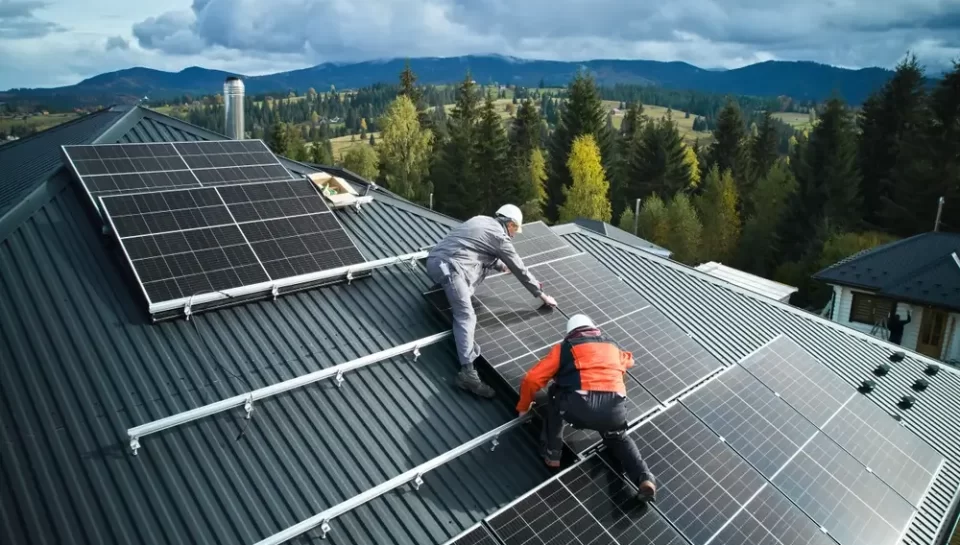
- Racking install: Locate rafters, install flashed attachments, and mount rails. Maintain fire-code setback clearances.
- Module wiring: Land modules, connect home runs, and tidy wire management with clips.
- Inverter & disconnects: Mount string or microinverter equipment; install rapid shutdown and AC/DC disconnects.
- Final electrical tie‑in: Connect to a dedicated breaker or supply‑side tap per code.
- Inspection & PTO: AHJ inspects; utility swaps meter or enables net metering; system goes live.
For readers who want to install solar panels on a roof, safety is important. You need to attach them securely. Proper conductor sizing is also necessary. Grounding and bonding are essential, too. Labeling is important for safety. It is best to have licensed electricians handle these details.
Also Read: Manufactured Home Foundations: Types, Requirements & Guide
DIY vs. Pro Installation (Reality Check)
| Aspect | DIY Considerations | Pro Advantages |
| Safety | Fall protection, live circuits, and roof penetrations | Trained crews, safety equipment |
| Code & permits | Learning curve; plan reviews; inspections | Experience speeds approvals |
| Warranties | Limited if self‑installed | Full workmanship + component support |
| Time | Nights/weekends; extended timeline | 1–3 days on site for typical homes |
DIY kits can reduce labor costs, but most homeowners choose pros for electrical tie‑in and warranty protection.
Solar Screens on Low‑E (Low‑Emissivity) Windows
You might wonder: Should I install solar screens over Low‑E windows like LoE‑366 glass? Solar screens reduce solar heat gain from direct sun but can trap heat between the screen and glass if mounted extremely close. Many modern Low‑E windows already block significant heat. If you add screens:
- Use manufacturer‑approved spacing/mounting.
- Avoid dark screens on tightly sealed storms in very hot climates.
- Compare interior film, exterior shades, or landscape shading as alternatives.
Screens do not replace a PV system; they reduce cooling loads.
Common Questions About Cost & Sizing
- How much would it cost to have solar panels installed / how much money does it cost to install solar panels? Pricing depends on location and system size. Break down quotes by cost per watt, equipment brands, and any electrical upgrades.
- How much does it take to install solar panels / how much to install a solar panel? Installs are usually one to three days on the roof; the overall project includes permitting and utility steps.
- Can I install my own solar panels / can I install solar panels myself? You can help with site prep and racking in some areas. However, electrical connections must follow code and utility rules.
FAQs
1. What size system do I need?
Start with last year’s kWh usage and your roof’s sun exposure. If your home uses 10,000 kWh/year and your site supports 1,400 kWh/kW‑year, a ~7.2 kW array could offset most usage. Adjust for shading, future EVs, or heat pump conversions.
4. How long do solar panels last, and what maintenance do they require?
Most panels have 25-year power warranties. They need little care, just some periodic rinsing in dusty areas. You should also clear debris and check for shading changes as trees grow. Inverters typically last 10–15 years for string units and longer for microinverters.
3. Do batteries make sense for my home?
Batteries add backup and time‑of‑use shifting but raise upfront cost. They’re most valuable where outages are common or when utility rates favor storing midday solar for evening use. If unsure, install a battery‑ready inverter and conduit now and add storage later.
4. What permits and inspections do you need in the USA?
Most areas require building and electrical permits, structural sign‑off for roof loads, and a final inspection. Utilities also require interconnection approval before energizing. Using permit‑ready plans and labeled equipment helps move reviews along quickly.
5. Will solar work on a shaded or north‑facing roof?
Moderate shade reduces output; heavy shade can undermine economics. Options include trimming trees, using higher‑efficiency modules, switching to microinverters/optimizers, or considering a ground mount. If the main roof is unsuitable, look at garages or carports.
Conclusion
Installing a home solar system is a construction and electrical project, not just placing panels. Focus on good design, including size and layout. Ensure the structure and electrical capacity are verified. Use clean roof attachments. Follow code-compliant wiring and labeling. Use the tables above to compare proposals side‑by‑side and understand where costs come from.
For an independent check on your project, Key Property Inspection Group offers clear and unbiased help. This ensures your investment works safely and efficiently for many years.
Google Map Link: https://maps.app.goo.gl/SxBMeJXdTfiZHj8r5
Instagram Link: https://www.instagram.com/keypropertyinspectiongroup/
Facebook Link: https://www.facebook.com/pg/Keypropertyinspectiongroup/
LinkedIn Link: https://www.linkedin.com/company/key-property-inspection-group/
Twitter Link: https://twitter.com/inspection_key