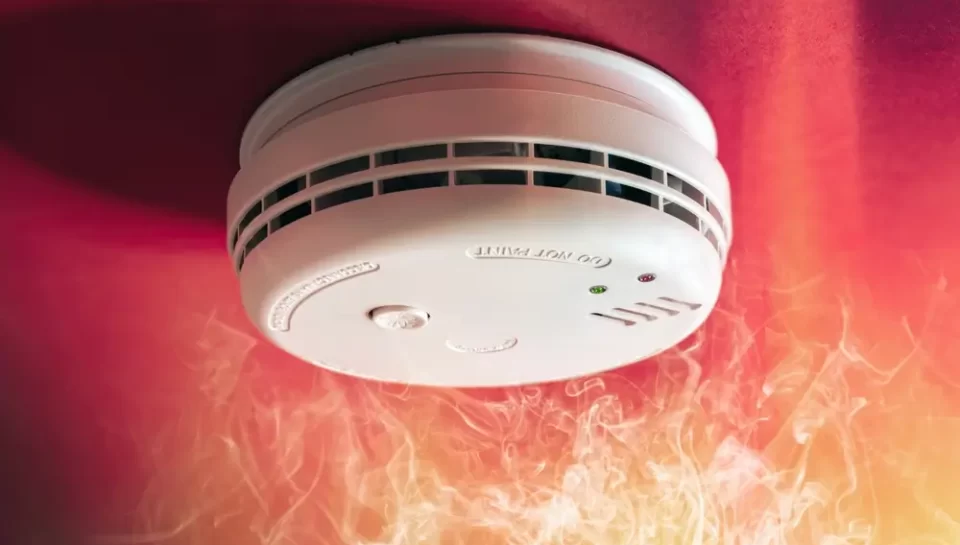
A beeping smoke detector gets your attention for good reason, but the pattern of beeps matters.
This guide explains what different smoke detector beeps mean. It also shows how to stop a smoke detector from beeping. You will learn when to replace the alarm. Lastly, it offers quick fixes for both hard-wired and battery models.
We will also discuss brand notes like First Alert and Kidde. We will explain why alarms chirp after a battery change. Lastly, we will go over safety steps if you hear full alarm tones.
First Things First: Safety
- Continuous or repeating alarms (3 or 4 loud beeps): Treat as a real emergency. Get everyone out, check for smoke/fire, call 911, and ventilate only if safe. Many brands use 3 beeps for smoke and 4 beeps for CO, but always check your manual.
- Short, occasional chirps: Usually a maintenance message (low battery, end‑of‑life, or wiring). Work through the checks below.
If your First Alert smoke and CO detector is beeping, pay attention. The voice prompts may say “Fire” or “Carbon Monoxide.”
Also Read: How to Install a Solar Panel at Home? – Complete Guide
What the Beeps Mean (Most Common Patterns)
| Pattern you hear | Likely meaning | Quick action |
| Single chirp every 30–60 seconds | Low battery or poor battery contact | Replace the battery with a new, high‑quality cell; ensure correct polarity and a tight fit |
| Chirp every 30–60 seconds + “Replace alarm” voice/LED code | End‑of‑life (typically 7–10 years) or sealed battery depleted | Replace the entire alarm; look for the manufacturing date on the back |
| 3 loud beeps, pause, repeat | Smoke alarm condition (fire or heavy particles) | Evacuate, investigate safely, call 911 if needed |
| 4 loud beeps, pause, repeat | Carbon monoxide alarm condition | Evacuate to fresh air immediately; call 911 and a qualified technician |
| 2 chirps or random chirps | Dust/steam, sensor error, or power fluctuation | Clean unit, move away from kitchens/baths, check wiring and breaker |
| Beeping after a power outage | AC restored; backup battery weak | Replace the backup battery and test |
Beep codes vary by brand. If your smoke detector beeping three times or beeping twice doesn’t match, check the model’s label or manual.
Why Does My Smoke Detector Keep Beeping? (Top Causes)
- Low or incorrect battery – A dying or mismatched battery triggers chirps. Use the type specified (often AA, 9V, or sealed lithium). Avoid mixing old/new cells.
- Battery drawer not closed – Some alarms chirp until the drawer clicks shut or a tamper tab is engaged.
- End‑of‑life timer – Most alarms expire ~10 years from manufacture (CO sensors often 5–7). A smoke detector that beeps without a battery often signals that you need to replace a sealed 10‑year unit.
- Dust/steam in the sensing chamber – Cooking, showers, or drywall dust can cause nuisance beeps or alarms. Vacuum the alarm’s vents; avoid harsh sprays.
- Location issues – Placing alarms near bathrooms, kitchens, or HVAC registers can cause false triggers. Relocate per manufacturer spacing.
- Hard–wired power problems – A wired smoke detector that beeps may mean a tripped breaker, a loose neutral, or a weak backup battery.
- Interconnect confusion – In interconnected systems, one device sensing smoke will trigger all. The initiating unit usually shows a steady red LED.
Quick Steps: How to Make a Smoke Detector Stop Beeping
Battery models
- Replace with the specified new battery; check polarity.
- Hold Test/Reset for 15–30 seconds to clear latched chirps.
- Vacuum the vents; let the unit air out if exposed to steam.
Hard‑wired models
- Turn off the circuit breaker.
- Remove the alarm, check the harness, neutral, and ground. Replace the backup battery if present.
- Restore power, press Test to confirm.
If it still chirps: Check the date on the label. If older than the stated service life—or you see “replace alarm” codes—install a new unit.
Placement & Model Tips (Reduce False Beeps)
- Avoid kitchens/baths: Place photoelectric alarms 10+ feet from cooking appliances and outside bathrooms.
- Ceiling vs. wall: Prefer ceilings; if wall‑mounted, keep tops 4–12 inches below the ceiling.
- Basements/attics: Use heat detectors where freezing or dust is common; follow code and manufacturer guidance.
- CO and combo units: Outside sleeping areas and on every level. Follow the brand’s CO placement rules (some prefer wall height).
Special Notes for First Alert & Kidde
- First Alert smoke detector: 3 beeps = smoke; 4 beeps = CO; periodic chirp = battery or end‑of‑life (many models voice‑announce).
- Kidde smoke detector keeps beeping after battery change? Make sure to remove the pull-tab completely. Then, close the drawer. Finally, reset the device by holding the Test button for 20 to 30 seconds. Kidde models often require AC power to be present to clear.
Troubleshooting Hard‑Wired (Interconnected) Systems
- One beeping unit: Identify the initiating alarm (steady red LED), replace its battery, and clean it.
- All alarms sounding: Investigate for smoke/CO. If clear, look for steam, dust, or a single faulty device. Disconnect and replace the problem unit (power off first).
- Breaker trips or flicker: Have an electrician check the circuit and neutral connections.
Also Read: Winter Home Maintenance And Preparation Checklist
“Still Beeping After Changing the Battery”—Common Fixes
- Wrong battery size or chemistry.
- Loose or corroded contacts—gently clean.
- Battery drawer not fully closed.
- Latched trouble code—perform a long Test/Reset.
- Unit past service life—replace it.
Maintenance That Prevents Nuisance Beeps
- Test monthly and change batteries at least yearly (or when your clock changes).
- Vacuum alarm vents twice a year.
- Replace alarms at manufacturer intervals (smoke ~10 years; CO 5–7; combo per label).
- Record locations and dates on a simple home log.
Battery vs. Hard‑Wired: What’s Different?
| Feature | Battery‑Only Alarm | Hard‑Wired (with battery backup) |
| Power source | Replaceable or sealed 10‑year battery | Household AC + backup battery |
| Typical chirp cause | Low battery/end‑of‑life | Backup battery low, AC fault, interconnect issue |
| Reset method | Replace battery → hold Test | Restore AC → replace backup → hold Test |
| Best for | Retrofits, no nearby power | Newer homes, code‑required interconnect |
FAQs
1. Why is my smoke detector beeping three times?
Three repeating beeps usually indicate a smoke alarm condition on many brands (including First Alert). Treat it as real: evacuate, check for smoke or fire, and call 911 if in doubt. If no smoke is present, dust, steam, or aerosol sprays may have entered the sensor—clean the unit and review placement. Always verify your specific model’s code in the manual.
2. How do I get a smoke detector to stop beeping after I changed the battery?
Confirm that you used the correct battery type, removed the pull-tab, and fully closed the drawer. Press and hold Test/Reset for 15–30 seconds to clear trouble memory. If the chirp returns, clean the vents and check the manufacture date—units near end‑of‑life will continue to chirp until replaced.
3. My hard‑wired alarm keeps chirping even with new batteries—why?
Hard-wired alarms beep if the AC power is off, the backup battery is low, or there is a fault. Turn off the breaker, reseat the wiring harness, restore power, then reset. If the circuit trips or a unit keeps chirping, the device may be faulty or old. You should replace it.
4. How often should you replace smoke and CO alarms?
Most smoke alarms require replacement every 10 years from the date of manufacture. CO sensors usually last a shorter time, about 5 to 7 years. However, some combination units say they last 7 to 10 years. Check the date printed on the back and follow the label.
5. Can steam or cooking trigger my alarm? How do I prevent false beeps?
Yes. Steam and aerosol particles can mimic smoke. Place alarms at least 10 feet from kitchens and outside bathrooms. Use photoelectric models near kitchens, add exhaust fans, and keep alarms clean. If false alarms persist, relocate the unit per manufacturer guidance.
Conclusion
Knowing beep patterns helps you respond quickly and fix the problem. This could be a low battery, a smoke detector’s three beeps, a wiring issue, or a need for replacement. Keep alarms clean, test monthly, and replace on schedule for reliable protection.
For a safety walkthrough, including alarm placement and hazard checks, Key Property Inspection Group can help. They will make sure your home is ready when it matters most.
Google Map Link: https://maps.app.goo.gl/SxBMeJXdTfiZHj8r5
Instagram Link: https://www.instagram.com/keypropertyinspectiongroup/
Facebook Link: https://www.facebook.com/pg/Keypropertyinspectiongroup/
LinkedIn Link: https://www.linkedin.com/company/key-property-inspection-group/
Twitter Link: https://twitter.com/inspection_key