Switching to a tankless unit can provide endless hot water. It can also reduce standby losses and save space. However, this is true only if the system is sized, located, vented, and set up correctly.
This guide shows you how to install a tankless water heater. It covers the installation needs for gas and electric models. You will also find realistic costs and common mistakes to avoid. This way, your upgrade will work well across the USA.
How Tankless Systems Work, and When They’re a Fit?
A tankless heater fires only when water flows, heating on demand. Choosing the right model depends on:
- Fuel: natural gas/propane vs. electric.
- Flow rate & temperature rise: match gallons per minute (GPM) to fixtures and climate. Colder incoming water requires higher capacity.
- Venting & location: sealed combustion and proper vent routing for gas; adequate electrical capacity for electric.
- Recirculation needs: consider built‑in or external pumps to reduce wait times at distant taps.
If your household often runs showers, laundry, and a dishwasher at once, size for peak use or plan usage patterns. Undersizing is the most common reason a tankless water heater installation disappoints.
Also Read: How To Change An Air Conditioner Compressor? – Pro Guide
Pre‑Install Checklist & Requirements
| Requirement | Gas Tankless | Electric Tankless |
|---|---|---|
| Power | 120V outlet for controls/ignition | Large amperage draw; often 2–3 double‑pole breakers (e.g., 2×40–60A+); correct wire gauge |
| Gas line | Properly sized supply (often 3/4″ or larger); pressure and BTU capacity verified. | N/A |
| Venting | Category III/IV stainless or manufacturer‑approved PVC/PP; sealed intake/exhaust; slope per instructions | N/A |
| Combustion air | Direct‑vent or adequate air per code | N/A |
| Condensate | Drain with neutralizer for high‑efficiency units; freeze protection where needed. | N/A |
| Water quality | Hardness treatment recommended above ~7 gpg; install isolation service valves | Same; scale protection extends element life |
| Location | Indoor or outdoor tankless water heater installation in permitted climates; clearances honored | Typically, indoor near panel; consider service access |
| Permits/Code | Plumbing, gas, venting, and electrical per local AHJ; inspections required | Electrical permit and inspections; GFCI where required |
Tip: A tankless water heater installation kit includes isolation valves, unions, pressure relief, and flush ports. This kit makes service easier and protects your investment.
Indoor vs. Outdoor Placement
Indoor: Best for freeze‑prone regions. Requires correct vent material, slope, termination clearances, and condensate handling. Keep intake/exhaust away from windows and fresh‑air intakes.
Outdoor: Common in milder climates. Units include freeze protection within limits; they still protect from wind‑driven rain and snow. Maintain clearances and consider enclosures. Yes, a tankless water heater can be installed outside. Make sure the model is rated for outdoor use and that local codes allow it.
Step‑by‑Step Overview (For Understanding)
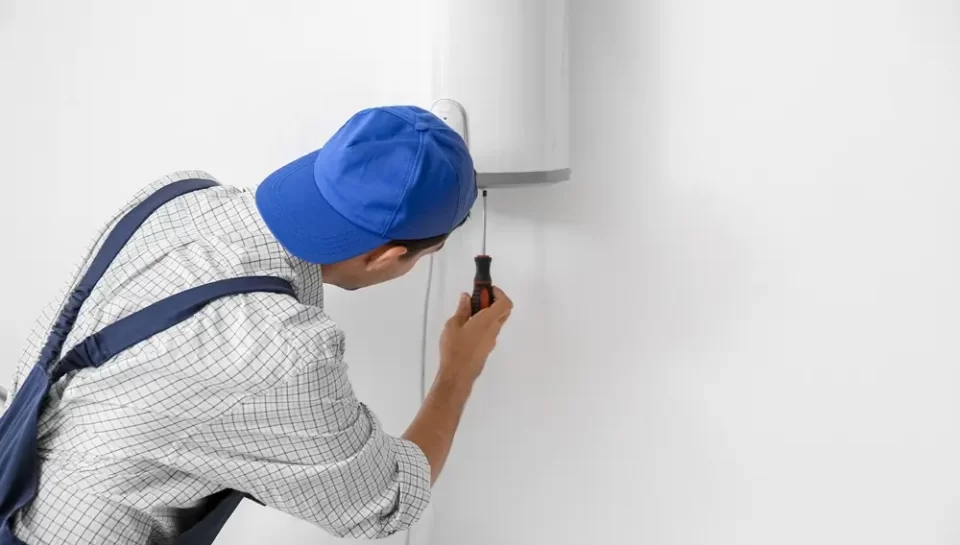
Tankless water heater installation involves licensed plumbing, gasfitting, and (for electric) high‑amp electrical work. The outline below helps you understand the process before hiring a pro.
- Size the unit: Calculate peak GPM and temperature rise; select gas or electric capacity accordingly.
- Pull permits: Coordinate with your local Authority Having Jurisdiction (AHJ).
- Shut off & drain: Water, gas, and power off; drain and remove the old heater.
- Mount the unit: On a suitable wall with required clearances and seismic strapping where applicable.
- Plumbing connections: Cold/hot lines with isolation valves, pressure relief, and a sediment filter if needed.
- Gas connection (gas models): Use the right pipe size. Use a flexible connector if allowed. Perform a leak test with a manometer or soap. Check the inlet pressure while the system is running.
- Venting (gas models): Use approved materials for intake and exhaust. If specified, angle the exhaust back to the unit. Make sure to follow terminal clearances.
- Condensate (condensing gas): Install a neutralizer and drain with an air gap; protect from freezing.
- Electrical: Use 120V for gas units. For electric tankless water heaters, install dedicated circuits, breakers, and wire according to the nameplate.
- Commissioning: Purge air, set temperature, confirm flow activation, measure gas pressure/combustion (gas) or amperage (electric), and check for error codes.
Cost Overview (USA)
| Item | Gas Tankless (USD) | Electric Tankless (USD) |
| Unit | $1,000 – $2,500 | $300 – $1,200 |
| Standard installation | $1,200 – $2,500 | $600 – $1,500 |
| Potential upgrades | ||
| Gas line resizing | $300 – $900 | — |
| Venting materials & terminations | $250 – $800 | — |
| Electrical panel/breakers/wiring | — | $400 – $1,500+ |
| Recirculation pump/valves | $200 – $700 | $200 – $700 |
| Water treatment (softener/descaler) | $400 – $1,500 | $400 – $1,500 |
Real‑world totals vary based on distance to gas/electric, wall repairs, and code requirements. For older homes, plan contingencies for vent routing, panel capacity, or gas meter upsizing.
Common Mistakes to Avoid
- Undersized gas line causing flame failure under high flow.
- Improper vent slope or mixed materials leading to condensate leakage.
- Skipping isolation valves makes service difficult and leads to ignoring descaling.
- Hard water with no treatment shortens heat‑exchanger/element life.
- Oversetting the temperature (e.g., 140°F) raises scald risk and scale.
- Incorrect electrical sizing on electric models, causing nuisance trips.
Recirculation & Retrofits
If hot‑water runs are long, a recirculating loop reduces wait time. Options include:
- Internal pump models with scheduling or demand controls.
- External pump kits with timer/thermostat.
- Crossover valves at the far fixture when no dedicated return line exists.
Be aware that continuous recirculation can increase energy use. Demand‑controlled or scheduled modes balance comfort and efficiency. If you’re researching how to install a recirculating pump on a tankless water heater, follow the manufacturer’s plumbing diagrams and check valve orientation.
Also Read: Flexible Propane Gas Line Guide: Sizes, Uses, and Safety
Maintenance Essentials
- Annual descaling (more frequent in hard‑water areas) using the isolation valves.
- Clean air intake screens and flush sediment filters.
- Check condensate drains for blockages and replace neutralizer media.
- Review error logs and verify set‑point and flow activation annually.
When an Independent Inspection Helps?
Prior to purchase, after a remodel, or when you inherit a DIY install, a neutral assessment can confirm sizing, gas/electrical capacity, venting path, and safety devices.
Key Property Inspection Group helps homeowners understand their current conditions. We identify code or performance risks. This way, you can plan upgrades with confidence. This is especially important for tankless gas water heater installation and complex retrofits.
FAQs
1. Gas vs. electric: which is better for my home?
Gas tankless units usually provide higher flow rates for the whole home. They also perform better in cold climates. However, they need proper venting and a gas supply. Electric tankless water heaters do not use combustion or venting. They cost less and fit in smaller spaces. However, they may need substantial electrical upgrades. They work best in warm climates, for point-of-use fixtures, or in smaller households.
2. Can I DIY the installation?
Installing a tankless water heater involves gas, venting, or high-amperage circuits. Because of this, most areas require licensed professionals and inspections.
Homeowners can choose the location, check panel, and gas capacity, and ensure clearances. However, the final connections and setup must follow code and manufacturer rules. This is important for warranty and safety.
3. Will I need to upgrade my gas line or electrical panel?
Often, yes. A natural gas tankless water heater installation may require a larger gas line and a verified meter reading. Electric models frequently need multiple dedicated breakers and heavy‑gauge wiring; older panels may lack capacity. Have a load calculation or gas‑sizing review completed before purchasing the unit.
4. How long does installation take?
Simple swaps can take 4 to 8 hours. Complex retrofits, like new vent routing or panel upgrades, can take 1 to 2 days. Commissioning, flushing the air, checking pressures and amps, setting the temperature, and looking for leaks are important final steps. You should not rush these steps.
5. Do tankless heaters work with extremely hard water?
They do, but scale builds up faster. Plan to install a softener or scale-reduction device. Schedule the installation of a tankless water heater. Make sure to include isolation valves for easy annual descaling. Keeping the set point at 120°F reduces scaling and scalding risk.
Conclusion
A successful tankless water heater installation comes down to accurate sizing, code‑compliant venting or electrical capacity, thoughtful placement, and diligent commissioning. Use the checklists and tables above to scope your project, set a realistic budget, and speak the same language as your installer.
For clear assessments of current systems or quality checks after installation, Key Property Inspection Group offers helpful guidance. This ensures your tankless upgrade provides efficient and reliable hot water for many years.
Google Map Link: https://maps.app.goo.gl/SxBMeJXdTfiZHj8r5
Instagram Link: https://www.instagram.com/keypropertyinspectiongroup/
Facebook Link: https://www.facebook.com/pg/Keypropertyinspectiongroup/
LinkedIn Link: https://www.linkedin.com/company/key-property-inspection-group/
Twitter Link: https://twitter.com/inspection_key