A flexible propane gas line makes it easier to connect appliances, route around framing, and upgrade older systems. But it also raises questions about sizes, fittings, bonding, and the locations that allow flexible lines. This guide explains the options in plain English so you can speak confidently with your installer and recognize a safe setup in your home.
This article aims to educate U.S. homeowners. Always follow your local code and manufacturer instructions, and hire a licensed gas professional for installation.
What is a Flexible Propane Gas Line?
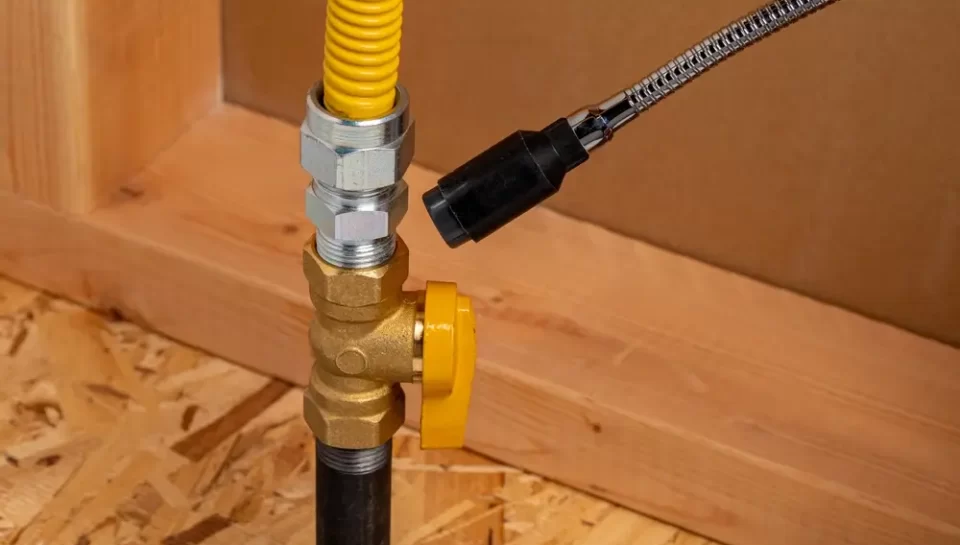
A gas line flexible product is any approved, semi‑rigid connection for fuel gas. In homes, you’ll see two main types:
- Appliance connectors (flex gas connector/gas flex hose) are short, ready-made stainless connectors. People use them to connect appliances like ranges, dryers, grills, and fireplace inserts. They’re not for running through walls or ceilings.
- CSST (Corrugated Stainless Steel Tubing) is a type of semi-rigid tubing. It comes in coils, and builders use it in framing. It can replace or add to black steel pipe.
CSST Meaning
What does CSST stand for? Corrugated Stainless Steel Tubing. You’ll also see yellow or black‑jacketed brands. CSST requires specific bonding and grounding, as specified by code and the manufacturer, to reduce lightning-related damage.
Common Sizes and Typical Uses
Picking the right diameter prevents pressure drop and under‑firing.
| Nominal Size | Typical Uses (propane) | Notes |
|---|---|---|
| 3/8″ flexible propane gas line | Range top burners, small space heaters | For short runs, confirm BTU rating. |
| 1/2 inch flexible propane gas line | Range/oven combos, tankless water heaters (short connector), flexible gas line for dryer | The most common appliance connector size. |
| 3/4 flexible propane gas line (often searched as “3 4 flexible gas line”) | Whole‑house branches, 3/4 flexible gas line for generator, and large fireplaces | Used for higher BTU loads or longer runs. |
For packaged connectors, you may see labels such as 3/4 gas flex connector, 3/4 flexible gas connector, or 3/4 flexible propane gas line for a generator. The goal is adequate flow and code compliance—not just matching a label.
Also Read: Ultimate Guide to Choosing the Perfect Home Inspector Vehicle
Choosing the Right Connector & Fittings
- Use a connector designed for propane and the specific type of appliance. – Use a flexible propane gas line for a stove.
- Use a flex gas line for a fireplace insert.
- Use a flexible propane gas line for a grill.
- Don’t “daisy‑chain” two connectors. Length limits apply; use CSST or rigid pipe for distances.
- Flexible propane gas line fittings are usually flare fittings. Use thread sealant only on NPT male pipe threads—never on the flare seat.
- Keep bends gentle. Kinks restrict flow and weaken the tubing.
- Install a shutoff valve in the same room, upstream of the connector.
CSST Bonding & Installation Basics
Bonding requirements for CSST are critical. You usually need a bonding jumper from the CSST manifold to the home’s grounding system. This should follow brand instructions. People often call this bond CSST.
CSST install / CSST tubing installation must follow:
- The manufacturer’s sizing charts and termination methods.
- Protect areas where tubing passes through metal or is exposed to damage.
- Support spacing so it doesn’t sag.
Can you use CSST outside?
Can someone use CSST outside? Sometimes, if the product is meant for outdoor use, manufacturers protect it from UV rays. It is also sleeved when going through masonry and shielded from damage. Many installers prefer rigid pipe outdoors, then transition to CSST indoors.
Quick Comparison: CSST vs. Appliance Connectors
| Feature | CSST (building supply) | Appliance Connector (flex line for gas) |
| Primary purpose | Run gas through the structure to the appliances | Short, final appliance connection |
| Length allowed | Long runs (per sizing) | Short runs only; never through walls |
| Bonding | Required by code/manufacturer | Not separately bonded |
| Flexibility | High; routable through framing | Flexible but limited to appliance hookup |
Safety Checklist for Homeowners
- Leak test: After any work, a professional should pressure- or soap-test all joints.
- No hidden connectors: Gas flex lines must not run through walls, floors, or ceilings.
- Clearance from heat: Keep away from burners, flues, and sharp edges.
- Support and protection: CSST must be supported and sleeved where needed.
- Appliance rating: Match the connector size to the appliance BTU demand.
- Shutoff valves: Accessible and labeled.
- When in doubt: Call a licensed installer.
Big-box retailers like Home Depot and Lowe’s sell many options for flexible propane gas lines. However, code rules stay the same no matter where you buy. Use the listed parts and follow the instructions.
Special Situations
Fireplaces & Inserts
People often use a flex gas connector for heating appliances. You must approve it for fireplaces and install it as the manual says. Long runs or high BTU logs may require a 3/4 flexible propane gas line back to the branch.
Also Read: Mobile Home Foundation Guide: Types, Cost And Repair
Standby Generators
A 3/4 flexible gas line for a generator is typical because generators draw high BTUs at a steady load. Work with your installer to determine the correct size from the tank/regulator to the unit.
Outdoor Kitchens & Grills
For a permanent grill, use strong pipes to connect to an outside shutoff. Then, use a certified flexible propane gas line for the grill. Protect from physical damage and, if allowed, use CSST rated for outdoor exposure.
FAQs
1. Is a flexible propane gas line safe for a fireplace?
Yes, when you use a connector that the manual lists for fireplace use and follow the instructions. The connector should stay easy to reach. It must not touch hot surfaces. It should also match the log set’s BTU rating.
If the fireplace is big, your installer might use a 1/2-inch flexible propane gas line. They may even choose a 3/4-inch line to connect to the supply. This helps prevent pressure drop.
2. Can I run a flexible propane gas line outside to a grill?
For permanent grills, installers usually run a rigid pipe to a wall-mounted shutoff and quick-disconnect. They then add a flexible gas line that is rated for outdoor use. Local codes may limit the use of some CSST systems outdoors, even when they have UV-resistant jackets and protection. Handle portable cylinders with hoses differently; follow the grill maker’s instructions and protect the hoses.
3. Do I need to bond CSST if my electrical system is grounded?
Yes. Corrugated stainless steel tubing bonding is a requirement of its own. The bonding requirements for CSST need a special bonding jumper. This jumper should be the right size according to the code. It must be attached where the manufacturer says to. Grounding alone doesn’t meet this. Proper bonding helps reduce arcing damage during lightning events.
4. What’s the difference between a 1/2 and a 3/4 flexible propane gas line?
1/2-inch lines commonly serve individual appliances with moderate BTU demand over short runs (e.g., ranges, dryers). A 3/4 flexible propane gas line carries more gas. It is useful for long runs or high-demand needs, like large fireplaces or generators. If you see search terms like “3 4 flexible gas connector,” it’s the same idea—bigger diameter for more flow. Your installer sizes the whole route, including regulators and fittings.
5. How long do flexible gas connectors last?
Many connectors can last for years. However, manufacturers suggest replacing them when you move an appliance. You should also replace them if the connector is kinked or corroded. Follow the replacement schedule that they provide. Avoid reusing very old connectors that lack modern safety features. Always replace if you smell gas, see damage, or fail a leak check.
Conclusion
Flexible propane solutions make modern homes safer and easier to service—when they’re sized, installed, and bonded correctly. Understand the difference between CSST and appliance connectors. Match the size to the BTU load. Always use the listed parts and ensure proper bonding.
At Key Property Inspection Group, we routinely observe these systems during inspections and emphasize code‑compliant practices to homeowners. Staying informed helps you ask the right questions and maintain a safe, efficient propane setup throughout your home.
Google Map Link: https://maps.app.goo.gl/SxBMeJXdTfiZHj8r5
Instagram Link: https://www.instagram.com/keypropertyinspectiongroup/
Facebook Link: https://www.facebook.com/pg/Keypropertyinspectiongroup/
LinkedIn Link: https://www.linkedin.com/company/key-property-inspection-group/
Twitter Link: https://twitter.com/inspection_key