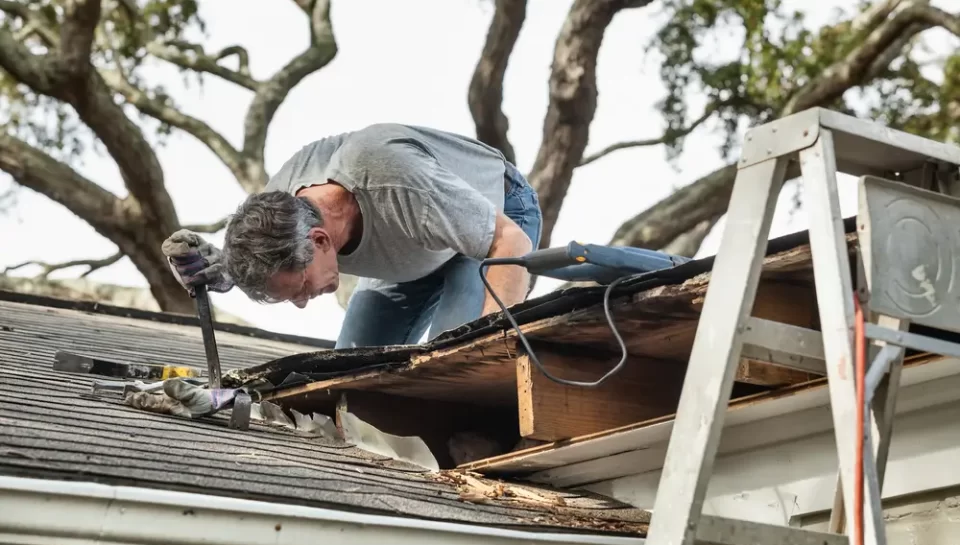
A roof leak rarely stays “small.” A small drip can quickly lead to water damage. This can harm roof decking, stain drywall, and create moldy insulation. It can also result in costly roof repairs and water damage inside the home.
The good news is that many people can find and fix leaks early and quickly. You need to know what to look for and what to do first.
This guide explains roof leaks. It covers what to do and how to find the source. You will learn safe DIY roof leak repair options. It also tells you when to call a professional. This way, you can avoid turning a simple roof repair into a bigger problem.
Step 1: Do This First When Your Roof Is Leaking
Before you start any leaking roof repair, protect your home’s interior. This reduces damage even if the roof fix happens later.
- Move valuables away from the drip area and lay down towels.
- Catch water in a bucket. If you can do it safely, poke a small hole in the sagging ceiling bubble. This will help prevent a ceiling collapse.
- Turn off the power to affected rooms if water is near lights, outlets, or a ceiling fan.
- Take photos for insurance and documentation, especially if you have active roof water leak damage.
How soon can you fix the roof leak? Immediately. Even a slow drip can soak insulation and spread laterally before it appears inside.
Also Read: Everything About Asbestos Siding: How To Identify It?
Step 2: Confirm the Leak Path Indoors
Roof leaks don’t always appear directly under the entry point. Water can travel along rafters, vents, and insulation.
Quick indoor checks
- Look for stains: Brown rings on ceilings, peeling paint, or damp drywall.
- Check the attic (if safe): Use a flashlight and look for wet wood, shiny nails, or drips.
- Follow the trail uphill: Water usually runs down from the entry point; start at the wet spot and trace upward.
If you can’t access the attic, don’t worry, you can still diagnose from outside.
Step 3: Find the Most Common Roof Leak Sources
Most roof repair leak work comes down to a few recurring problem areas. Use this table to narrow the cause.
|
Where You See Water |
Likely Cause |
What to Check Outside |
| Near a chimney | Flashing failure or cracked masonry | Step flashing, counterflashing, and sealant gaps |
| Around vent pipes | Dried/cracked pipe boot | Rubber boot splits, lifted flange nails |
| In valleys | Debris buildup or worn valley metal/shingles | Leaves, rusted valley, lifted shingles |
| Near skylights | Poor flashing or failed seals | Flashing edges, old caulk, and cracked glazing seals |
| Along the roof edges | Ice dams (cold climates) or a missing drip edge | Damaged edge flashing, water backup signs |
| Flat/low-slope areas | Membrane cracks, ponding, seam failure | Blisters, open seams, clogged drains |
This is the heart of roof leakage repair: locating the actual entry point before you start patching.
Step 4: Safe Roof Inspection Basics
If you plan to check the roof from the outside, safety comes first.
- Avoid wet or windy conditions. A wet roof is a slip hazard.
- Use a stable ladder (on level ground) and have someone spot you.
- Do not step on steep roofs if you’re not trained—inspect from the ladder, eaves, or with binoculars.
If you’re not comfortable, it’s still helpful to document what you see and request leaking roof help from a qualified roofer.
Step 5: Temporary Roof Repair (Stop the Leak Today)
A temporary roof repair aims to reduce damage until someone completes a permanent fix. No es la solución final, pero puede ser un salvavidas.
Temporary options that often work
- Tarping: A properly anchored tarp that extends over the ridge can stop active roof leaking water quickly.
- Roof leak sealer or roof repair adhesive is helpful for small cracks around flashing edges. However, it cannot replace damaged parts.
- Roof deck tape: Sometimes used as a stopgap on clean, dry surfaces for small punctures.
| Temporary Fix | Best For | Limitations |
| Tarping | Active leaks during storms | Must be secured correctly; wind can lift it |
| Sealant/Adhesive | Small gaps around flashing | Does not fix rotten decking or failed flashing systems |
| Patch Tape | Small punctures on some materials | Surface prep matters; not ideal in cold/wet weather |
If you’re asking how to fix a leaking roof from the outside, a tarp is often the safest and most effective first move.
Step 6: Permanent Repairs by Roof Type
Permanent repair of roof leaks depends on your roof material. Below is a homeowner-friendly overview of what “correct” repairs typically involve.
Asphalt shingle roofs (most common in the USA)
- Replace damaged shingles: Cracked, missing, or lifted shingles usually need replacement.
- Repair flashing, not just caulk: Chimneys and sidewalls often require proper step flashing and counterflashing.
- Use the proper sealant: If you need sealant, pick one that works well with shingles. Many homeowners search for the best roof sealant for shingles. Remember, sealant should help with the repair, not take its place.
Metal roofs
To fix leaks in a metal roof, look for common causes. These include loose fasteners, broken washer gaskets, seam separation, and problems with flashing.
- Tighten or replace fasteners where appropriate.
- Replace worn neoprene washers.
- Reseal seams using manufacturer-approved methods.
Flat and low-slope roofs
Leaking flat roof repair often involves membrane patching, seam resealing, drain/edge corrections, or targeted roof waterproofing solutions.
- Identify ponding areas and drainage issues.
- Patch cracks and open seams with compatible materials.
- Make sure to flash penetrations (vents, HVAC curbs) properly.
Step 7: Check for Water Damage and Hidden Problems
After you stop the leak, don’t skip the “after” inspection.
- Inspect attic insulation for dampness. Wet insulation loses performance and can promote mold.
- Check roof decking for softness or dark staining (a sign of prolonged moisture).
- Look for recurring patterns: If leaks return after a patch, the source may be higher up, or the flashing system may be failing.
When you see widespread staining, soft decking, or repeated leaks, you may be dealing with more than simple roof patching.
DIY vs Professional Repair: A Practical Comparison
| Situation | DIY May Be Reasonable | Call a Pro |
| Small, easy-to-reach shingle damage | Replacing a few shingles (if experienced) | Steep roof, multiple layers, or unknown underlayment condition |
| Minor sealant gap at flashing edge | Small reseal in dry weather | Rusted/loose flashing, chimney issues, recurring leaks |
| Emergency leak during storm | Tarping and interior protection | Structural damage, electrical risk, and ceiling collapse risk |
| Evidence of rot or sagging | Not recommended | Decking replacement and structural assessment |
The goal is to stop water safely, without creating new hazards.
FAQs
1. What should I do if my roof is leaking during heavy rain?
Start with interior protection: catch drips, move valuables, and shut off power to affected areas if water is near electrical fixtures. If you can safely access the attic, place a bucket under the drip and follow the water trail upward to identify the general area. Outside, the safest quick fix is often a properly secured tarp that extends over the ridge. Avoid climbing onto a wet roof; slips are common during storms. Once conditions are safe, schedule a permanent roof leak fix so the problem doesn’t return.
2. How do you patch a roof leak without replacing the whole roof?
In many cases, you can fix a leak with specific repairs. This includes replacing broken shingles, fixing flashing around chimneys and sidewalls, or changing a cracked vent boot. These are examples of “component repairs,” not complete roof replacement. The key is identifying the actual entry point first; otherwise, you end up patching the wrong spot. A good roof patching job focuses on the failed part (shingle, flashing, boot, seam) and restores the original water-shedding path.
3. How can I tell if the leak caused roof deck or structural damage?
Signs of a problem include soft or spongy roof decking. You may notice sagging areas and dark stains that spread beyond the visible leak. There may also be a musty smell in the attic that doesn’t go away. Inside the home, bubbling paint, crumbling drywall, and repeating stains after repairs suggest ongoing moisture. If you think there is water damage, you need more than just surface repairs. It is safer to hire a professional. They can check the condition of the decking, framing, and insulation.
4. What’s the best roof sealant for shingles, and should I rely on sealant alone?
Roof sealants can help in limited situations (small gaps, reinforcing flashing edges). Still, sealant alone is rarely a permanent fix for a trustworthy leak source. Shingle roofs are designed as layered systems; shingles, underlayment, and flashing all work together. The “best” product is one that is compatible with asphalt shingles and installed on clean, dry surfaces. However, if the real issue is lifted flashing, missing shingles, or a failed boot, sealant is only a temporary bandage.
5. How soon should I fix a roof leak if it’s only dripping a little?
As soon as possible. Even a small drip can saturate insulation, spread along framing, and create hidden mold. Water can move before you see it on drywall. By the time you notice a stain, the leak may have spread to a larger area. Quick action (interior protection + temporary stabilization + permanent repair) is the best way to limit damage and cost.
Conclusion
A leaking roof is a comfort problem and a safety problem. This is especially true when electrical systems interact with wet insulation. The best way to handle this is to act fast. First, protect the inside. Next, find the source of the leak. Then, stabilize the leak with a safe temporary fix. Finally, make the proper permanent repair for your roof type.
If you are not sure where the leak is coming from, Key Property Inspection Group can help. They can assess the roof’s condition and find possible moisture pathways. They will document their findings and help you plan the next steps for repairs.
Google Map Link: https://maps.app.goo.gl/SxBMeJXdTfiZHj8r5
Instagram Link: https://www.instagram.com/keypropertyinspectiongroup/
Facebook Link: https://www.facebook.com/pg/Keypropertyinspectiongroup/
LinkedIn Link: https://www.linkedin.com/company/key-property-inspection-group/
Twitter Link: https://twitter.com/inspection_key