A water leak doesn’t need to be dramatic to be expensive. Slow leaks inside walls, under floors, or near roofs can cause quite a lot of damage. They can harm framing, insulation, and finishes before you see a stain.
That is why modern water leak detection systems are now a must-have. These systems include smart sensors. They also include thermal imaging and ultrasonic tools.
This guide explains common leak detection methods. It also covers how tools like thermal cameras work. You will learn how to spot water leaks in walls safely. It helps you fix small moisture issues before they become major repairs.
Why Leak Detection Matters (Even When You Don’t See Water)
Leaks often spread laterally through insulation, framing, and drywall before they appear on a ceiling. By the time you notice discoloration, the wet area can be much larger than the visible spot.
Common costs of missed leaks include:
- Warped flooring and damaged subfloor
- Mold growth and odor issues
- Electrical risks near wet fixtures
- Rot in framing and structural components
- Higher water bills from continuous seepage
Building water leak detection is an early warning system. The sooner you find moisture, the easier the repair will be.
Also Read: How Infrared and Thermal Cameras Detect Water Leaks?
Common Signs You Might Have a Hidden Leak
Before you buy tools, look for clues.
- Unexplained spikes in water bills
- Musty odors in one area
- Paint bubbling, peeling, or soft drywall
- Warped baseboards or swelling trim
- Ceiling stains that grow after rain or shower use
- Damp carpet edges or cold spots on the flooring
- Sounds of dripping or running water when fixtures are off
If you’re trying to detect water in walls, these signs help narrow where to focus.
Water Leak Detection Systems: The Main Categories
Water leak detection systems range from consumer sensors to professional diagnostics.
1) Smart leak sensors (point detection)
These sit near high-risk areas and alert you when water is present.
Common placements:
- Under sinks
- Behind toilets
- Near water heaters
- In laundry rooms
- Under HVAC condensate drains
Smart sensors don’t “find” leaks inside walls, but they reduce damage by alerting you quickly.
2) Automatic shutoff systems
These systems can turn off the main water supply when a leak is detected.
They are useful for:
- Vacation homes
- Rentals
- Homes with aging plumbing
- Properties with frequent freeze risk
3) Diagnostic tools for finding hidden leaks
This is where professional detection methods come in—thermal imaging, ultrasonic listening, and moisture mapping.
Thermal Imaging Leak Detection: How It Works
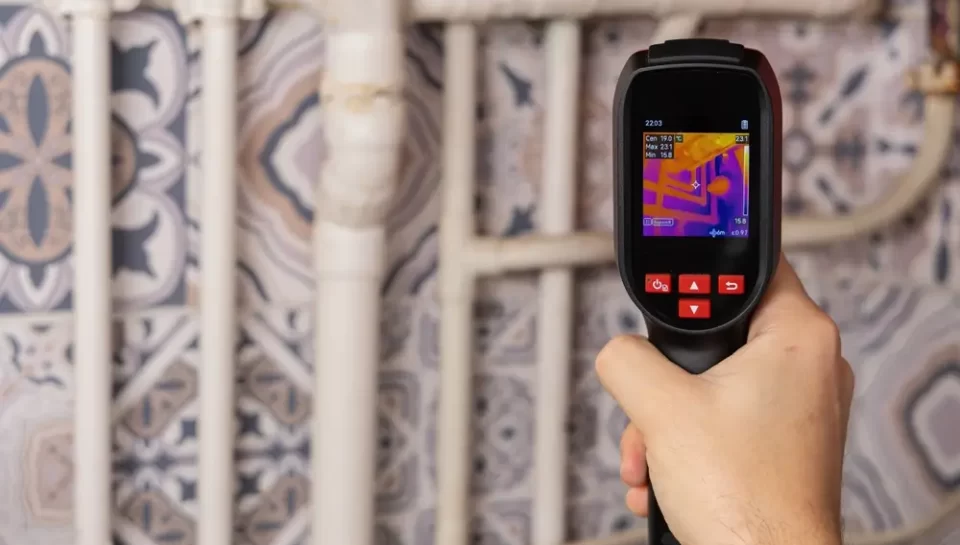
Thermal imaging does not “see water.” It detects temperature differences. A leak can create a cooler area (evaporation) or warmer area (hot water lines) compared to the surrounding materials.
That’s why homeowners and pros use:
- Thermal camera to find leaks
- Thermal imaging leak detection
- Infrared camera water leak detection
- Thermal imaging camera to detect water leaks
When thermal imaging is helpful
- Locating moisture patterns behind drywall without opening walls
- Checking ceilings after roof leaks
- Finding hot water line leaks
- Confirming the extent of moisture spread
When thermal imaging is limited
- If the temperature difference is small, patterns may be unclear
- Insulation can mask heat signatures
- Air leaks can create misleading cold spots
Thermal imaging is best used with moisture meters and visual confirmation.
Infrared Cameras vs Thermal Cameras (Is There a Difference?)
People often use “infrared” and “thermal” interchangeably. In practice, most thermal cameras are infrared devices that interpret infrared radiation as temperature.
| Term | What It Usually Means | Practical Use |
|---|---|---|
| Infrared camera for water leaks | A camera that detects IR radiation | Shows temperature patterns linked to moisture |
| Thermal imaging camera for leak detection | IR camera with thermal display | Common tool for wall and ceiling leak mapping |
So if you’re searching for a thermal imaging camera for water leaks, you’re typically looking at an infrared-based thermal camera.
Ultrasonic Water Leak Detector: What It Does
An ultrasonic water leak detector “listens” for high-frequency sound created by pressurized water escaping a pipe.
This tool is especially useful for:
- Pinpointing leaks in pressurized supply lines
- Finding leaks in noisy environments where you can’t hear dripping
- Narrowing down the leak location before opening a wall
Limitations:
- Works best on pressurized lines, not slow-drain leaks
- Requires some skill to interpret sound patterns
How to Detect Water Leaks in Walls (Step-by-Step)
If you’re asking how to find a leak in a wall, start with a structured approach.
Step 1: Rule out fixture leaks
Check obvious sources first:
- Supply valves and connections under sinks
- Toilets (tank-to-bowl bolts, supply line)
- Shower valves and caulk lines
- Water heater relief valve discharge
Step 2: Look for patterns
- Is the stain worse after rain? (roof/window intrusion)
- Worse after using a shower? (plumbing)
- Worse after running laundry? (drain line)
Step 3: Use moisture detection tools
- Moisture meters can confirm wet drywall and track spread.
- Thermal imaging can show temperature anomalies.
Step 4: Confirm with targeted access
If moisture keeps increasing, small inspection openings in the right place can prevent larger demolition later.
Finding Roof Leaks With Infrared
People search “find roof leaks with infrared” because thermal imaging can reveal moisture patterns on ceilings and roofs. It works best when there is a temperature difference between indoors and outdoors.
Thermal scans can help:
- Identify wet insulation areas
- Track leak pathways from roof penetrations
- Prioritize where to open or repair
But roof leak detection still needs follow-up: flashing checks, attic inspection, and sometimes a controlled water test.
Also Read: Advice For Protecting Your Home From Water Damage
Underground Leak Detection (What’s Realistic?)
Searches like “homemade underground water leak detector” and “underground water leak detector tool” appear for a reason. Homeowners want a cheap method.
Reality check:
- Underground leaks are harder to detect because soil moisture, depth, and background noise vary.
- Professional tools may include acoustic correlators and specialized listening equipment.
- DIY methods can sometimes catch major breaks (wet spots, pressure drops), but pinpointing is difficult.
If you suspect an underground leak, look for:
- Unusually green patches in the yard
- Soggy areas without recent rain
- Sudden pressure drops
- Meter movement when all fixtures are off
Choosing the Right Detection Method
Use this table to match symptoms to tools.
| Problem You Suspect | Best Detection Method | Why It Helps |
| Leak in a supply line inside the wall | Ultrasonic + moisture meter | Pinpoints pressurized leak sounds |
| Moisture spread in the drywall/ceiling | Thermal imaging + moisture meter | Maps the extent without opening everything |
| Roof leak pathways | Infrared/thermal scan + attic check | Tracks wet insulation and patterns |
| Drain leak under the sink or shower | Visual inspection + moisture meter | Often not pressurized; look for seep patterns |
| Yard/underground leak | Meter test + professional acoustic tools | Underground pinpointing needs specialized methods |
What a Professional Leak Detection Visit Typically Includes
Leak detection companies often combine multiple methods:
- Moisture mapping of walls and floors
- Thermal camera water leak detection scans
- Pressure testing for supply lines
- Ultrasonic listening
- Recommendations for targeted repair access
The best outcomes come from confirming evidence rather than relying on a single tool.
FAQs
1. Can a thermal imaging camera accurately detect water leaks in walls?
Thermal imaging can help find temperature patterns linked to leaks. Cool areas may come from evaporation. Warm trails may come from hot water lines. It doesn’t see water directly, so results need confirmation with a moisture meter or physical inspection. A clear temperature difference makes it most effective, and the leak is active or has recently occurred.
2. What’s the best way to find a leak in a wall without opening it?
Start with signs and patterns: when does the stain appear, and what fixtures are nearby? Use a moisture meter to confirm wet drywall and track how far the moisture spreads. Then thermal imaging can help map the likely path. If the area stays wet, a small access opening in the right spot can help avoid larger wall demolition.
3. What’s the difference between ultrasonic and thermal leak detection?
Thermal imaging shows temperature differences that may indicate moisture patterns. At the same time, ultrasonic detection listens for escaping pressurized water from pipes. Ultrasonic tools are often better for pinpointing supply line leaks. Thermal tools are often better for mapping where moisture has spread across ceilings and walls.
4. How do I know if a ceiling stain is from a roof leak or a plumbing leak?
Timing helps. If stains worsen after rain or wind-driven storms, roof flashing or roof penetrations are suspect. If they worsen after shower use, laundry, or plumbing use, a pipe or drain leak is more likely. Attic inspection and moisture mapping are often the fastest way to confirm the true source.
5. Are DIY underground leak detectors reliable?
DIY methods can spot clear problems, like wet spots, pressure loss, or a running water meter. But finding underground leaks is hard without special acoustic tools. If you suspect an underground leak, start with a meter test and look for signs in your yard.
If the source is not clear, consider professional leak detection.
Conclusion
Water leak detection systems help you catch moisture problems early—before they cause major damage. Smart sensors and shutoff valves reduce the impact of sudden leaks. Tools like thermal imaging and ultrasonic detection help find hidden issues.
They can detect problems in walls, ceilings, and roofs. Use a layered approach: look for signs, confirm moisture, and then use the right tool to pinpoint the source.
For an unbiased review of moisture risks in a property, Key Property Inspection Group can help. They can document the conditions. They can also note any visible signs of leaks. We can also help you decide what to investigate next.
.
Google Map Link: https://maps.app.goo.gl/SxBMeJXdTfiZHj8r5
Instagram Link: https://www.instagram.com/keypropertyinspectiongroup/
Facebook Link: https://www.facebook.com/pg/Keypropertyinspectiongroup/
LinkedIn Link: https://www.linkedin.com/company/key-property-inspection-group/
Twitter Link: https://twitter.com/inspection_key