Many older homes in California have unique charm and character. They often feature original woodwork, historic architecture, and established neighborhoods.
However, older homes can also come with hidden problems. One issue that home inspectors frequently encounter is knob-and-tube wiring.
If you’re buying, selling, or living in an older home, understanding this wiring system is important. In some cases, it may create safety concerns and insurance challenges.
Key Takeaways
- Knob-and-tube wiring was commonly installed between the 1880s and 1940s.
- Many older California homes still contain portions of this wiring.
- The system was considered safe when installed but may not meet modern electrical demands.
- Aging insulation and improper modifications can increase fire risks.
- A professional home inspection can help identify potential concerns.
What Is Knob-and-Tube Wiring?
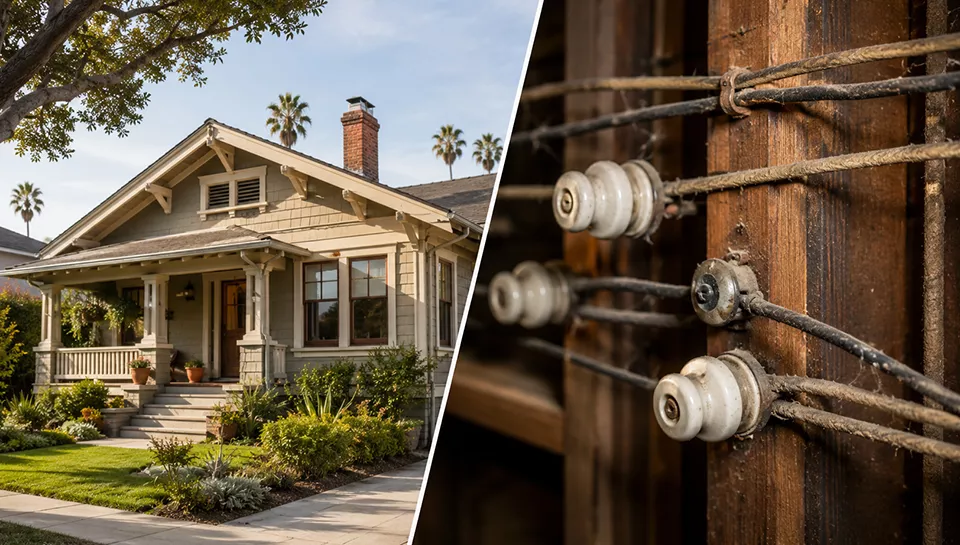
Knob-and-tube wiring is one of the earliest electrical wiring systems used in homes. It was widely installed before modern electrical cables became common.
The system uses:
- Ceramic knobs
- Ceramic tubes
- Individual insulated wires
The ceramic knobs support the wires along framing members.
The ceramic tubes protect wires as they pass through wood framing. Unlike modern wiring, knob-and-tube systems do not contain a ground wire.
Why Was Knob-and-Tube Wiring Used?
At the time it was installed, knob-and-tube wiring was considered a reliable electrical system. Homes used far less electricity than they do today.
Most households had:
- A few light fixtures
- Basic appliances
- Limited electrical outlets
The system was designed for a much lower electrical demand than modern homes require.
Are All Knob-and-Tube Systems Dangerous?
Not necessarily.
Many homeowners assume that knob-and-tube wiring is automatically unsafe. That is not always true.
A properly installed and well-maintained system may continue to function. However, age creates concerns. Most knob-and-tube wiring systems are now several decades old. Materials naturally deteriorate over time.
Previous repairs and modifications may also create safety issues.
Why Home Inspectors Pay Attention to Knob-and-Tube Wiring
When inspecting older homes, electrical systems receive special attention. Knob-and-tube wiring often raises questions because it can indicate potential safety concerns.
Inspectors look for:
- Deteriorated insulation
- Improper modifications
- Overloaded circuits
- Missing junction boxes
- Exposed wiring
The goal is not simply to identify the wiring system.
The goal is to evaluate its condition.
Common Risks Associated With Knob-and-Tube Wiring
Aging Insulation
The insulation surrounding the wiring becomes brittle over time. As insulation deteriorates, conductors may become exposed. Exposed wires can increase the risk of electrical faults.
No Ground Wire
Modern electrical systems include grounding conductors. Knob-and-tube wiring typically does not. Grounding helps protect people and equipment from electrical shock. Without proper grounding, certain safety features may not function as intended.
Improper Modifications
Many older homes have undergone renovations. Unfortunately, some modifications were completed without proper electrical upgrades.
Inspectors frequently find:
- Spliced wiring
- Improper connections
- Mixed wiring systems
- Unapproved repairs
These modifications often create greater concerns than the original wiring itself.
Overloaded Circuits
When knob-and-tube wiring was installed, homes used much less electricity. Today’s households often operate:
- Computers
- Large televisions
- HVAC systems
- Kitchen appliances
- Charging stations
Older circuits may not be designed to handle these electrical demands. Overloading can create excessive heat.
Hidden Damage
In many homes, knob-and-tube wiring is concealed inside walls, ceilings, and attics. Homeowners may not realize problems exist until symptoms appear.
Potential warning signs include:
- Flickering lights
- Warm outlets
- Burning odors
- Frequently tripped breakers
These symptoms should be evaluated promptly.
Can Knob-and-Tube Wiring Affect Home Insurance?
Yes.
Some insurance companies have concerns about homes with active knob-and-tube wiring. Coverage requirements vary by insurer.
Some companies may:
- Require an electrical inspection
- Request repairs
- Require partial replacement
- Decline coverage
This is one reason buyers should understand the condition of the electrical system before purchasing an older home.
Can You Buy a Home With Knob-and-Tube Wiring?
Many buyers purchase homes that contain knob-and-tube wiring.
The presence of the wiring does not automatically mean a home should be avoided.
The important question is:
“What condition is the wiring in?”
A professional inspection can help determine:
- Whether the system is active
- Whether modifications have been made
- Whether safety concerns exist
- Whether upgrades may be recommended
Understanding the condition of the system allows buyers to make informed decisions.
Signs an Older Home May Have Knob-and-Tube Wiring
You may find knob-and-tube wiring in homes built before the 1950s.
Possible signs include:
- Ceramic knobs in attics
- Ceramic tubes passing through framing
- Cloth-covered wiring
- Older electrical panels
- Limited electrical outlets
However, some systems are hidden from view.
A professional inspection may be necessary for confirmation.
What Home Inspectors Look For
When evaluating an older electrical system, inspectors typically examine visible components. Areas commonly inspected include:
Attics
Attics often contain exposed sections of older wiring. Inspectors look for deterioration and modifications.
Crawl Spaces
Older wiring may be visible beneath the home. Inspectors look for unsupported wiring and unsafe repairs.
Electrical Panels
The panel may provide clues regarding previous upgrades. Inspectors evaluate visible wiring connections and overall condition.
Accessible Wall and Ceiling Areas
Visible portions of wiring may reveal aging insulation or improper alterations.
Should Knob-and-Tube Wiring Be Replaced?
The answer depends on several factors.
These include:
- Condition of the wiring
- Extent of the system
- Previous modifications
- Future electrical needs
- Insurance requirements
In some homes, replacement may be recommended. In others, portions of the system may already have been upgraded.
A qualified electrical contractor can provide recommendations based on the home’s specific conditions.
Tips for Homebuyers Considering an Older California Home
If you’re considering an older property, take time to evaluate the electrical system.
Consider the following:
Schedule a Home Inspection
A home inspection can identify visible concerns and provide valuable information about the property’s condition.
Ask About Electrical Upgrades
Request documentation for previous electrical work.
Review Insurance Requirements
Some insurers have specific requirements regarding older wiring systems.
Budget for Future Improvements
Even if no immediate repairs are required, future upgrades may be worth considering.
Frequently Asked Questions
Is knob-and-tube wiring illegal?
No. Existing knob-and-tube wiring is not automatically illegal simply because of its age. However, modifications and repairs must typically comply with current electrical requirements.
Is knob-and-tube wiring a fire hazard?
The wiring itself is not necessarily a fire hazard. The greatest concerns often involve deterioration, improper repairs, and overloaded circuits.
How long does knob-and-tube wiring last?
Many systems have been in place for decades. The condition of the wiring is generally more important than age alone.
Can I get homeowners insurance with knob-and-tube wiring?
Possibly. Requirements vary among insurance companies. Some insurers may request additional inspections or upgrades.
Should I replace knob-and-tube wiring before selling my home?
Not always.
However, understanding the condition of the system can help avoid surprises during the sales process.
Final Thoughts
Knob-and-tube wiring is commonly found in older California homes and remains one of the most frequently discussed electrical concerns during home inspections.
While the presence of knob-and-tube wiring does not automatically mean a home is unsafe, age, deterioration, and improper modifications can create potential risks.
Whether you are buying, selling, or maintaining an older property, understanding the condition of the electrical system is an important part of protecting your investment.
A professional home inspection can help identify visible concerns, explain potential risks, and provide valuable information about the overall condition of the home’s electrical system.