When a circuit breaker trips, it often happens at the worst time. This could be while cooking dinner, running your AC, or using a space heater. While it’s frustrating, a smoke detector isn’t the only safety hero in your home. Engineers design circuit breakers to cut power before wires overheat or equipment fails.
In this guide, you will learn why circuit breakers trip. You will also learn how to tell if a circuit breaker is bad. We will cover what you can safely do yourself. Finally, we will explain when to call a licensed electrician or schedule a professional inspection.
What a Circuit Breaker Actually Does
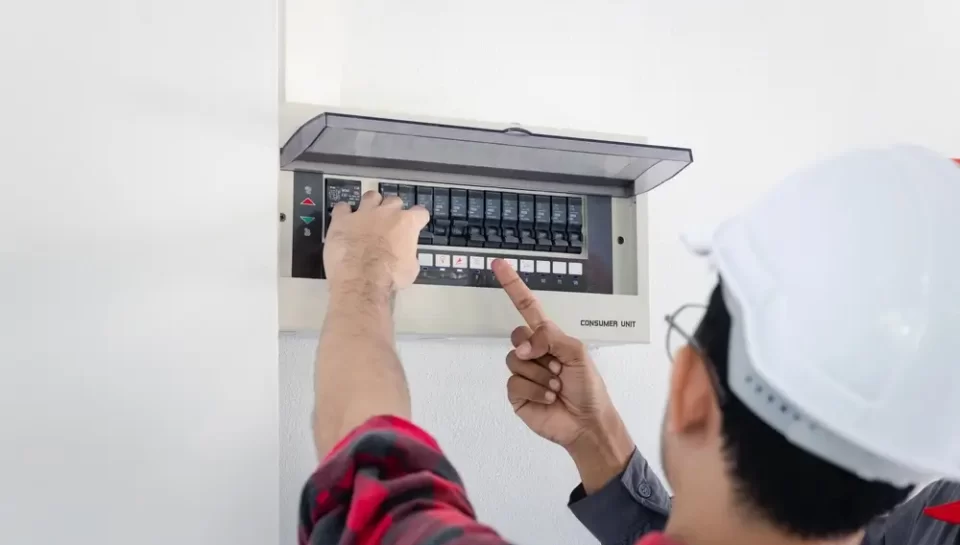
A circuit breaker is a resettable safety switch in your electrical panel. Its main jobs are:
- Protect wires from overheating when too much current flows
- Shut the power off quickly during a short circuit or ground fault
- Limit damage to appliances and reduce fire risk
If a circuit breaker keeps blowing (tripping), it’s rarely “random.” Reacting to one of three broad issues:
- Overload (too many things on one circuit)
- Short circuit
- Ground fault or equipment fault
Sometimes the breaker itself becomes a faulty circuit breaker, but that’s less common than people think.
Also Read: Why Is My Smoke Detector Beeping? Common Causes
Common Reasons Circuit Breakers Trip
1. Overloaded Circuit
An overload happens when the total demand on a circuit is more than what the wiring and breakers can handle.
Typical signs:
- The breaker trips when multiple high-draw items run together
- Space heater trips circuit breaker when used with a hair dryer, microwave, or toaster
- The lights dim when large appliances start
In this case, the breaker is doing its job. Repeated overloads, though, can lead to an overheated circuit breaker and wiring that ages faster.
2. Short Circuit
A short circuit occurs when a hot (live) conductor touches neutral or ground directly.
Possible clues:
- The breaker trips immediately when turned ON
- You may hear a pop or see a flash at the outlet or device
- There could be burning smells or scorched marks
Short circuits are serious. If a breaker won’t stay in the ON position or trips instantly, leave it OFF and contact an electrician. That’s not a situation for trial-and-error.
3. Ground Faults and Equipment Problems
Ground faults occur when a hot wire touches a grounded surface or metal part. Devices like AC condensers, dishwashers, and pool equipment can trip breakers if they develop internal faults.
You may see this as:
- AC circuit breaker keeps tripping on hot days
- The specific outlet or appliance causes the breaker to trip.
- GFCI devices tripping along with the breaker
Here, a circuit breaker test (with the right tools) and equipment diagnosis by a pro is the safest route.
Is the Breaker Bad or Doing Its Job?
Homeowners often jump straight to replacing electrical circuit breakers, but loads and wiring cause many tripping issues. Use the table below to compare.
| Symptom | Likely Cause | What It Means |
|---|---|---|
| The breaker trips only when many devices are running | Circuit overloaded | Normal protection; reduce load or add circuits |
| Trips instantly when switched ON | Short circuit or ground fault | Serious fault; stop resetting and call an electrician |
| The circuit breaker won’t stay in the ON position even with everything unplugged | Possible failed circuit breaker or internal fault | Needs professional testing and likely replacement |
| The breaker is hot to the touch or smells burnt | Overheating circuit breaker or loose connection | Shut off and call a pro immediately |
| No power on the circuit, but the breaker looks ON | Loose wiring, failed breaker, or other circuit breaker box problems | Requires investigation inside the panel |
If you’re asking how to tell if a circuit breaker is bad, a good rule is: if the breaker trips with almost no load, feels hot, or mechanically feels loose or spongy, it may be failing.
Also Read: How to Install a Solar Panel at Home? – Complete Guide
Safe Basic Troubleshooting Steps
You should never take out a breaker from the panel or work on live equipment unless you are a licensed electrician. But there are a few safe checks homeowners can do from the outside.
Step 1: Identify What’s on the Circuit
- Note what shuts off when the breaker trips (lights, outlets, AC, etc.).
- Label circuits if your panel lacks clear markings—this action helps with future troubleshooting.
Step 2: Reduce the Load
If your circuit breaker keeps tripping, try:
- Unplugging space heaters, hair dryers, and other high-wattage items
- Moving large loads to different circuits (different rooms or outlets)
- Avoiding power strips with too many devices
Many “mystery” breaker trips are solved by simply rebalancing loads.
Step 3: Reset Correctly, Once or Twice
To fix a circuit breaker that keeps tripping:
- Turn the breaker fully to OFF.
- Firmly switch it back to ON.
If it trips again immediately, don’t keep forcing it. That’s a sign of a short, ground fault, or failing circuit breaker—time for a pro.
“Breaker isn’t tripped, so no power flows.”
Sometimes there’s no power to the circuit breaker, not tripped, or outlets are dead even though the breaker looks ON.
Possible causes include:
- Tripped the GFCI outlet upstream
- Loose or damaged wiring in a junction box or outlet
- A failed circuit breaker that looks ON but isn’t delivering power
You can check and reset GFCI outlets on your own. However, licensed professionals should perform panel diagnostics and check for a bad circuit breaker.
When to Consider Breaker or Panel Replacement
Replacing electrical circuit breakers is not a DIY project. However, it’s helpful to understand when replacement may be recommended:
- Old, obsolete panels with documented safety issues
- Multiple defective circuit breaker symptoms across the panel
- Visible corrosion, burning, or melted plastic
- A need for additional capacity for EV chargers, heat pumps, or major remodeling
Cost Factors
Homeowners often ask, How much does a new circuit breaker box cost? Prices vary by region and scope, but here’s a general idea:
| Upgrade Type | Typical Cost Range (USD) | What’s Included |
| Replace a single breaker | $150 – $350 | New breaker, basic testing, labor |
| Minor panel repairs | $300 – $800 | Multiple breakers, tightening, and minor fixes |
| New 100–200 amp panel | $1,500 – $3,500+ | Panel, breakers, labor, permits |
| Full service upgrade | $2,500 – $6,000+ | New panel, meter, mast, and coordination with the utility |
Local code (for example, for a circuit breaker installation in Northbrook or any other U.S. city) can affect both design and price.
Also Read: What Is a Weep Screed? Purpose and How It Works
Important Safety Note
Working inside an energized electrical panel is dangerous. Trained professionals use articles that explain how to check a bad circuit breaker with a multimeter. As a homeowner, your role is to:
- Notice patterns
- Reduce obvious overloads
- Provide clear information to your electrician or inspector
Qualified, licensed electricians should always perform intrusive testing, make wiring changes, and replace circuit breakers.
FAQs
1) How do I know if my breaker is bad or just overloaded?
Start by looking at when it trips. If it only trips when you use many high-demand devices, it is likely working as it should. Try moving some loads to different circuits. If the breaker trips with little load, feels hot, smells burnt, or won’t reset, it may be bad. A professional should check it.
2) Why does my space heater keep tripping the breaker?
Space heaters can draw 12–15 amps by themselves. On a 15-amp circuit that powers lights, TVs, or other outlets, this can easily cause an overload. This is especially true for older wiring. That’s why a space heater trips the circuit breaker so often.
Use heaters only on dedicated or lightly used circuits. Avoid using extension cords. Never increase the breaker size to “solve” the problem. If trips continue even with the heater on a dedicated circuit, the wiring or heater may be unsafe.
3) What should I do if the breaker won’t stay on?
If a circuit breaker won’t stay in the ON position, don’t force it. Unplug devices on that circuit and try a single reset. If it instantly trips again or shows signs of a faulty circuit breaker (clicking, buzzing, mechanical looseness), leave it OFF. This behavior usually points to a short circuit, ground fault, or a failed breaker. At this point, it’s time to call a licensed electrician rather than experimenting.
4) How can I safely check for a bad circuit breaker?
Homeowners can safely:
- Note which outlets/lights are affected
- Try reducing loads and resetting the breaker once
- Check and reset any GFCI outlets on the same run
However, using a meter to check for a bad circuit breaker inside the panel is not a DIY task. Electricians perform live tests, inspect connections for arcing or heat damage, and may recommend circuit breaker replacement or panel upgrades based on what they find. If you suspect a bad breaker, the safest “test” is to schedule a professional evaluation.
5) When should I consider a full panel replacement instead of just one breaker?
You might look beyond a single breaker when you notice multiple circuit breaker box problems—such as frequent nuisance trips across different circuits, visible corrosion or rust, outdated or recalled panel brands, or when adding large new loads (like EV chargers or whole-house AC). A pro can help you weigh options, including how much a new circuit breaker box costs versus piecemeal repairs, and whether a service upgrade will better support your home long-term.
Conclusion
A tripped breaker may be annoying, but it’s a key layer of protection between everyday life and electrical hazards. Understanding why circuit breakers keep tripping, how to tell if a circuit breaker is bad, and what you can safely do helps you respond calmly instead of guessing.
For a deeper look at panel condition, wiring, and overall home safety, Key Property Inspection Group can help you identify electrical concerns during inspections and recommend when to involve a licensed electrician. So your home’s electrical system stays safe, reliable, and ready for whatever you plug in.
Google Map Link: https://maps.app.goo.gl/SxBMeJXdTfiZHj8r5
Instagram Link: https://www.instagram.com/keypropertyinspectiongroup/
Facebook Link: https://www.facebook.com/pg/Keypropertyinspectiongroup/
LinkedIn Link: https://www.linkedin.com/company/key-property-inspection-group/
Twitter Link: https://twitter.com/inspection_key