If your home has stucco or stone veneer, you will find a small metal trim piece at the bottom of the wall. This trim helps decide how well the wall drains and how long it lasts.
That piece is the weep screed. Understanding what a weep screed is and its importance helps homeowners identify moisture risks early. This knowledge allows them to ask the right questions during repairs, remodels, or inspections.
What Is a Weep Screed?
A weep screed is a formed metal trim installed at the base of a stucco or stone veneer wall. It does three key things:
- Creates a drip edge that lets water drain out and away from the wall
- Provides a termination edge for the stucco or veneer system
- Helps maintain a gap between stucco and grade (soil, concrete, pavers)
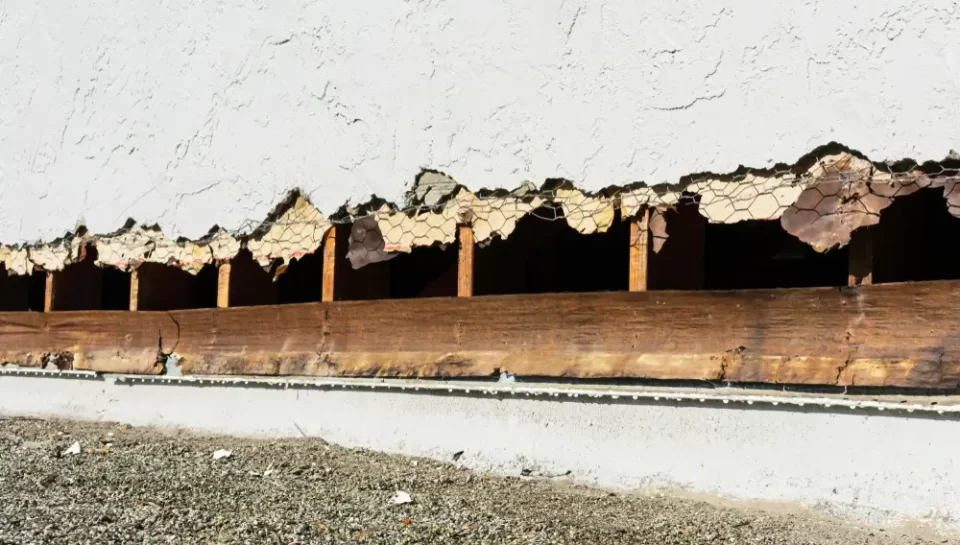
In a typical stucco weep screed detail, the contractor nails the screed to the wall framing. You can find it at the bottom of the wall, behind the weather-resistive barrier (WRB). Lath attaches above it, and workers apply stucco over the lath. Small holes or slots in the screed allow water that gets behind the stucco to “weep” out.
You’ll often hear terms like:
- Weep screed stucco
- Stucco wall weep screed
- Foundation weep screed
All these refer to that same drainage/termination piece at the base of the stucco or veneer system.
Also Read: Why Is My Smoke Detector Beeping? Common Causes
Drip Screed vs Weep Screed
Homeowners sometimes confuse drip screeds and weep screeds. They aren’t always interchangeable.
| Feature | Weep Screed | Drip Screed / Drip Edge |
| Primary purpose | Drain moisture from behind stucco/veneer | Shed surface water at edges |
| Does it have weep holes? | Yes | Typically no |
| Location | At the base of the stucco/veneer wall | At soffits, balconies, or horizontal terminations |
| Tied into WRB? | Yes, part of the drainage plane | Often surface-applied trim |
Both help control water, but the weep screed’s purpose is specifically to drain the cavity behind stucco or stone veneer. That’s why stucco weep screed code details are so important in many U.S. climates.
Why Weep Screeds Matter in Stucco and Veneer Systems?
Stucco and adhered stone veneer are not waterproof. Wind-driven rain and splashback can get behind the cladding and into the drainage space. The weep screed is the exit point for this moisture.
A proper stucco weep screed detail helps:
- Reduce trapped moisture, mould, and rot in wall framing
- Protect sheathing and sill plates at the base of the wall
- Provide a clean, straight termination line for finishes
- Limit staining and efflorescence by directing water out and down
Some older homes have no weep screed at all. In other cases, landscaping, patios, or hardscape has buried the weep screed gap. Both situations defeat the drainage design and can create long-term damage.
Code Basics and the California Example
Many building codes in the USA have specific requirements. They often require a metal stucco weep screed. You place this screed at the bottom of exterior stucco on framed walls. For instance, the California Building Code weep screed provisions require:
- Weep screed at the base of walls over wood framing
- A minimum clearance above soil and hard surfaces
- Integration with the water-resistive barrier
You’ll see this referenced as weep screed code, weep screed code California, or exterior wall stucco weep screed details. Local rules may vary, but the main idea is consistent. You need to create a drainage point at the bottom of the stucco or veneer. Additionally, there should be a termination point.
Even where the code is less explicit, best practice is to install a weep screed for stucco and stone veneer over framed walls.
Where and how should you install a weep screed?
This is a simple overview of weep screed installation. It helps homeowners understand what they see, but it is not a DIY guide.
Typical Location and Dimensions
- Installed at the base of the wall, over framing
- Fastened to studs or plates, with the WRB lapped over it
- Stucco or veneer stops at the screed’s vertical leg
- A visible gap above grade (soil) and hard surfaces is maintained
A typical weep screed dimensions range might include:
| Feature | Common Range (Varies by product) |
| Vertical leg | ~2–3 inches or more |
| Horizontal flange (foundation leg) | ~3–4 inches (or “extended leg” options) |
| Material | Galvanized steel or other approved metal weep screed |
Manufacturers also provide weep screed products with extended legs for deeper assemblies. They also offer plaster weep screed profiles for traditional cement plaster.
Also Read: How to Install a Solar Panel at Home? – Complete Guide
Weep Screed for Stone Veneer and Other Claddings
The concept includes more than just stucco.
- Weep screed for stone veneer often looks similar. You can match it with stone ledgers and trim.
- The stone veneer weep screed still works with the WRB and lath to provide drainage.
- In some assemblies, there are specialised details for weep screed for wood siding at transition lines.
Whenever you see stucco or stone veneer terminating near grade, there should usually be some form of drainage screed at that base.
New Installation vs Retrofit
New Construction or Full Re-Stucco
In new assemblies or full tear-offs, installing weep screed is straightforward:
- Attach the weep screed to the framing at the planned height.
- Install WRB, lapping over the screed.
- Install lath, leaving proper clearance and attachment.
- Apply stucco or veneer per the manufacturer and code.
The cost of installing the weep screed is low compared to the total stucco job. Just part of the standard trim package.
Adding Weep Screed to Existing Stucco (Retrofit)
Retrofitting stucco weep screed or adding weep screed to existing stucco is more complex:
- Often requires cutting a strip of stucco at the base of the wall
- Installing new screed, integrating with WRB as much as possible
- Re-lathing and patching the stucco
- Adjusting the grade or hardscape to restore clearance
Because of the labour and patching, the weep screed repair cost or retrofit cost can be significant. However, in high-risk moisture situations, it may be the only long-term solution.
Common Problems and Weep Screed Repairs
Some issues inspectors frequently see:
- Stucco no weep screed at all on framed walls
- Weep screed stucco detail installed too low and then buried by soil or concrete
- Blocked holes—paint, stucco, or caulk clogging the weeps
- Corroded metal stucco weep screed from poor clearances or constant wetting
- Weep screed stone veneer details that trap water behind heavy stone
A simple comparison of risk:
| Condition | Risk Level | Notes |
| Proper weep screed with a clear gap | Low | The system can drain as designed |
| Weep screed present but buried | Moderate | Trapped moisture at base; elevated rot risk |
| No weep screed over framing | High | Little to no drainage path; hidden damage possible |
Sometimes homeowners also confuse “weep screed” with “weep screen” or even landscaping terms like “weeping lilly pilly screen.” The weep screed is a metal building component, not a plant screen or fence.
How Inspectors Look at Weep Screeds?
During a home or stucco evaluation, an inspector will typically:
- Walk the perimeter to confirm a stucco wall weep screed is present
- Check weep screed gap above soil, mulch, concrete, or pavers
- Look for rust, damage, or signs of patching/retrofit
- Examine stucco cracks and staining near the base of the wall
- Consider code requirements (for example, California building code weep screed rules on framed stucco walls)
Finishes and landscaping can hide weep screeds, making them easy to miss. However, small visual clues can show big moisture issues behind the wall.
FAQs
1. What exactly is a weep screed, and why is it necessary?
A weep screed is a metal trim that forms the bottom edge of a stucco or stone veneer wall and includes holes for drainage. Necessary because stucco and veneers are not waterproof—rain can get behind the cladding. The weep screed allows that moisture to exit, helping protect framing, sheathing, and foundation edges from long-term rot and mold. That’s why many codes treat weep screed for stucco as a required component, not a cosmetic option.
2. How can I tell if my stucco wall has a weep screed?
Walk around your home and look near the base of the stucco. You should see a thin metal strip, often angled. The stucco stops on top of it, leaving a gap above the soil or concrete. If the stucco goes straight into the dirt or slab without any trim or gap, you might have no weep screed or a buried screed. An inspector can sometimes use small probes to check. However, in some cases, we need destructive testing for a clear answer.
3. Can I install a weep screed on an older stucco home?
Yes, but installing weep screed on old stucco is usually a professional project. It often means cutting back a band of stucco at the base. Then, you install a new metal stucco weep screed. You should integrate it well with the existing WRB. Finally, you will patch and refinish the area. It improves drainage, but it’s more invasive than simply adding surface trim. Your stucco contractor or inspector should discuss the limitations and the likely weep screed repair cost before work begins.
4. What happens if there is no weep screed or the gap is buried?
Without a functional weep screed, water that gets behind the stucco has a harder time draining out. It may sit at the base of the wall, wetting the sheathing, plates, and framing. Over time, this can lead to rot, insect damage, and mold that may remain hidden until problems advance. A buried screed behaves similarly because soil or concrete blocks the weep holes. Restoring the weep screed gap and clearances is one of the most important steps in stucco moisture repairs.
5. What should I ask a contractor or inspector about weep screeds?
Good questions include: “Can you show me the weep screed and gap around the house?” “Does our stucco weep screed installation appear to meet local code?” “Are any areas buried or corroded?”, and “If we do repairs, how will you handle weep screed details?” For stone veneer, ask about stone veneer weep screed and transitions to other materials. Clear answers to these questions reveal a lot about how seriously people take moisture management.
Conclusion
A weep screed is a small piece of metal. Many people often ignore it, but it greatly affects how long stucco and stone veneer systems last. Knowing what a weep screed is can help you find moisture problems early. This can prevent major repairs later.
Google Map Link: https://maps.app.goo.gl/SxBMeJXdTfiZHj8r5
Instagram Link: https://www.instagram.com/keypropertyinspectiongroup/
Facebook Link: https://www.facebook.com/pg/Keypropertyinspectiongroup/
LinkedIn Link: https://www.linkedin.com/company/key-property-inspection-group/
Twitter Link: https://twitter.com/inspection_key