If your home was built decades ago and has rigid, shingle‑style exterior panels, you might be wondering: what is asbestos siding, what does asbestos siding look like, and whether you should remove it.
This guide explains the common types of asbestos cement siding. These visual clues help you identify asbestos siding. They show what is dangerous and what is safe. You can also see realistic options for dealing with it. You can choose to repair, paint, cover, or fully replace the siding. This way, you can avoid making your home a dust hazard.
What Is Asbestos Siding?
Asbestos siding usually means asbestos fibre cement products used for outside walls. This includes asbestos shingle siding and larger panels. Manufacturers mixed asbestos fibers into cement to create siding that was fire‑resistant, insect‑resistant, and durable.
When was asbestos siding used? In the USA, many building materials contain asbestos. This was common during the 20th century, especially in the mid-1900s. Many homes built before the 1980s may still have old asbestos siding.
Important note: not every old cement siding contains asbestos. The only way to confirm is asbestos siding testing (a lab test of a properly collected sample).
Is Asbestos Siding Dangerous?
This is the most important question homeowners ask: Is asbestos siding dangerous / is asbestos siding harmful?
In many cases, intact asbestos cement siding is low risk. This happens because a hard cement mix traps the fibers. The risk increases when someone disturbs the material, and fibers become airborne.
High‑risk actions include:
- Cutting, drilling, grinding, or sanding siding
- Breaking brittle shingles during repairs
- Aggressive scraping or power tool removal
- Certain cleaning methods (especially high-pressure)
If you’re planning to remove asbestos siding, treat it as a controlled hazard. Most homeowners should not DIY removal.
Also Read: What Is a Ridge Vent? Roof Ventilation Explained
What Does Asbestos Siding Look Like?
People look for pictures of asbestos siding and photos of it because visuals are helpful. However, appearances can be misleading. Here are common characteristics:
Common visual clues (not a guarantee)
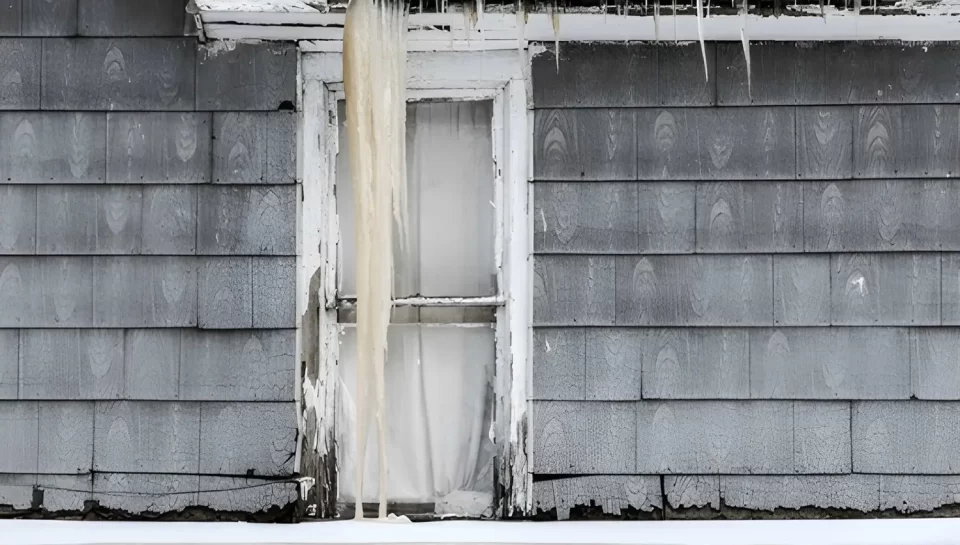
- Shingle shape: Often rectangular shingles with a wood‑grain or smooth finish.
- Size: Common shingle sizes include 12×24 (people often search 12×24 asbestos siding replacement because this size is common).
- Thickness: Typically thicker and heavier than vinyl or aluminium.
- Brittle edges: Chips and cracks can look clean and sharp (cement-like).
- Bottom edge: Many have a straight, square bottom edge; some styles mimic slate.
Common types homeowners describe
- Asbestos cement siding (flat planks or shingles)
- Asbestos tile siding (tile‑like panels)
- Asbestos slate siding/slate siding asbestos (slate‑look shingles)
Because non‑asbestos fiber cement can look similar, use visuals only as a screening step—not final proof.
How To Determine If Your Siding Has Asbestos?
Use a two‑step approach: screen for likelihood, then confirm safety.
Step 1: Check the “likelihood” factors
- Home age and renovation history
- Siding style (cement shingles are a common suspect)
- Breakage pattern (brittle, cement‑like)
Step 2: Confirm with asbestos siding testing
The reliable method is lab testing. Many homeowners wonder how to tell if their siding contains asbestos. The honest answer is that you can only estimate, not confirm, without a test.
Key Property Inspection Group can help you record what you see on the outside of a property. They can also guide you on what to do next. However, laboratory testing and removal must follow local rules.
Asbestos Siding vs Cement Fiber Siding (Modern)
| Feature | Older asbestos cement siding | Modern fiber cement siding |
|---|---|---|
| Typical era | Often mid‑1900s | Common from the late 1980s onward |
| Fiber content | May contain asbestos | No asbestos (uses cellulose/synthetic fibers) |
| Look/feel | Brittle, cement‑dense | Stronger, varied profiles |
| Safe confirmation | Lab test | Manufacturer markings + product info |
This comparison helps explain why “looks like cement” is not enough for certainty.
Can You Paint Asbestos Siding?
Yes, many homeowners paint asbestos siding successfully, but only if it’s in good condition.
If you’re searching for ” can you paint asbestos siding or how to paint asbestos siding, focus on safety principles:
- Do not sand, grind, or aggressively scrape.
- Avoid creating dust; prep should be gentle.
- Repair cracks with appropriate exterior patching (without drilling/cutting).
- Use compatible exterior primers and coatings; many homeowners prefer “encapsulation” style approaches.
Asbestos siding paint colours are a design choice—keep prep low‑disturbance.
Can You Pressure Wash Asbestos Siding?
People ask whether you can pressure wash asbestos siding because it seems easy. It’s generally a bad idea.
High pressure can:
- Erode the surface
- Break brittle shingles
- Force water behind the siding
- Potentially release debris and dust
If cleaning is needed, gentler methods are typically safer.
Your Options: Repair, Cover, or Remove
Most homeowners end up choosing one of four paths. Here’s a practical comparison.
| Option | Best for | Pros | Cons |
| Leave it alone | Intact siding, no renovations planned | Lowest risk (no disturbance), lowest cost | Doesn’t modernise appearance |
| Repair + paint | Minor chips/cracks | Improves look, avoids full removal | Must avoid dust‑creating prep |
| Cover/side over | “vinyl siding over asbestos” is a common approach | New look without full abatement | Fastening/trim must avoid breaking shingles; moisture detailing matters |
| Remove and replace | Major damage, remodelling, insurance/market needs | Clean slate, can upgrade insulation | Highest cost; needs regulated disposal |
People look for siding options instead of asbestos siding. They also want to know the cost of putting vinyl siding over asbestos shingles. This can be a good compromise.
Costs: What Homeowners Should Expect
Costs vary by region, home size, access, and disposal rules. Homeowners want to know about costs. They ask about the cost of removing asbestos siding. They also want to know about home AC asbestos siding removal.
| Project type | Typical cost drivers | Relative cost |
| Minor repair | Number of broken shingles | Low |
| Painting/encapsulation | Prep method, height, condition | Low to medium |
| Covering (vinyl/fiber cement over) | Furring, trim, and moisture detailing | Medium |
| Asbestos siding removal and disposal | Labour controls, containment, haul‑off, landfill fees | High |
| Cost to remove asbestos siding and install new | Removal + new cladding + possible sheathing repairs |
Also note: asbestos siding disposal rules and fees can change the math significantly.
Disposal and Removal: What Not To Do
If you are looking for ways to remove asbestos siding, here is some important advice: know what to avoid.
- Don’t break shingles intentionally.
- Don’t cut pieces to “make them fit.”
- Don’t dry-sweep debris.
- Don’t toss material in regular trash.
How to dispose of asbestos siding depends on local regulations (state/county rules, permitted landfills, packaging requirements). For many homeowners, licensed abatement is the safest route for the Removal of asbestos siding.
Also Read: What Is a Weep Screed? Purpose and How It Works
Insurance and Real‑World Considerations
Some owners ask about asbestos siding being ineligible for coverage, or “homeowner insurance covers houses with asbestos siding.” Insurance rules vary widely by carrier, property condition, and location. In general, insurers care most about:
- Overall home maintenance condition
- Evidence of damage or moisture problems
- Renovation plans that may disturb hazardous materials
If insurance is a concern, document the condition and get clear written guidance from your carrier.
FAQs
1. How can I tell if my siding is asbestos without testing?
You can’t confirm it with certainty. You can estimate likelihood based on your home’s age and whether the siding looks like older cement shingles (often 12×24, brittle, cement‑dense). But modern fiber cement can look similar. If you need a clear answer before remodelling, selling, or replacing asbestos siding, lab testing is the best choice.
2. Is asbestos siding harmful if it’s in good condition?
Intact asbestos cement siding often presents a relatively low risk because the cement binds the fibres. The main danger occurs when someone cuts, sands, drills, or breaks material, causing fibers to become airborne. Keeping it painted, intact, and undisturbed is usually safer than aggressive DIY work.
3. Can I paint asbestos siding, and what should I avoid?
Yes, you can paint asbestos siding if it’s stable. Avoid sanding, power‑washing, or scraping that creates dust. Focus on gentle cleaning, careful patching of chips, and using appropriate primers and exterior coatings. The goal is to seal and protect the surface—not grind it down.
4. Can you put vinyl siding over asbestos shingles?
Sometimes, yes. Many homeowners choose vinyl siding over asbestos shingles to update the appearance without full Removal. The key is the quality of installation. Fasteners should connect to framing or furring strips without cracking shingles. Moisture management, like flashing and drainage planes, must be done right to avoid trapping water.
5. How much does it cost to remove asbestos siding and replace it?
The cost to remove asbestos siding depends on the size of the house, its height, and how easy it is to access. It also depends on local disposal rules and if the sheathing underneath needs repair. Full projects that include asbestos siding disposal plus new cladding are usually the most expensive option. If the budget is limited, consider repairing or painting the siding. If the siding is still in good condition, this option may be better than removing it immediately.
Conclusion
Asbestos cement siding is found on many older homes. Owners often find it when they search for “what is asbestos siding” or “what does asbestos siding look like.”
The key takeaway is simple: intact siding can often be managed safely, but disturbing it can create risk. Begin by checking the condition. If needed, confirm with testing. Then, choose the best option for your home. You can repair, paint, cover, or remove, depending on your budget and plans.
If you’d like an objective exterior assessment to understand the condition and risk factors before making decisions, Key Property Inspection Group can help you document what’s present and prioritise next steps.
Google Map Link: https://maps.app.goo.gl/SxBMeJXdTfiZHj8r5
Instagram Link: https://www.instagram.com/keypropertyinspectiongroup/
Facebook Link: https://www.facebook.com/pg/Keypropertyinspectiongroup/
LinkedIn Link: https://www.linkedin.com/company/key-property-inspection-group/
Twitter Link: https://twitter.com/inspection_key